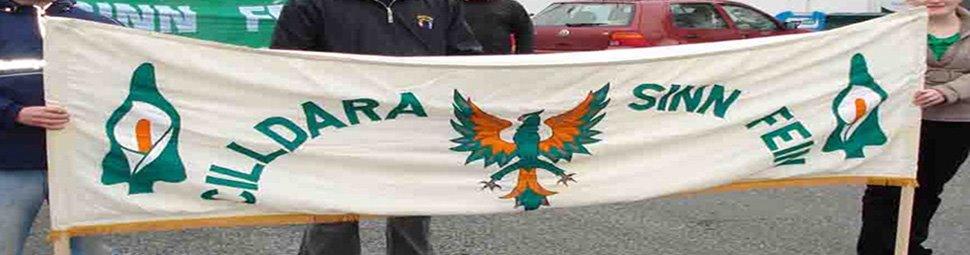
Cill Dara Shinn Féin Poblachtach

Posts mit dem Label The Singing Flame Blog werden angezeigt. Alle Posts anzeigen

Pseudo gangs, the media and the dark legacy of Frank Kitson

On Sunday January 6 Republicans from throughout Munster and other parts of Ireland gathered in Limerick for the annual Seán Sabhat commemoration organised by Republican Sinn Fein. Little did we think that the scene was being set for the playing out of a Kitsonian melodrama, but more of that later. 


To begin with a very fitting ceremony was held at the Republican Plot in Mount St Lawrence including a fine oration delivered by Geraldine McNamara of Co Tipperary, the National Publicity Officer of Republican Sinn Féin. All in all it was a dignified tribute to the memory of a noble Irish patriot. 


Sadly the day was marred by the activities of a small gang who have, since May of 2010, been actively attempting to steal both our identity and good name. I am conscious of the accusation that to talk or write about them is to give them an attention that they do not deserve and indeed some would say an attention they crave after. It is a point I would largely agree with but there are times when certain facts need to be placed on the public record. 


This we have not flinched from doing in the past and indeed will do so again in the future if we deem it necessary to vindicate the good name of Republicanism and in protecting it from the calumny of such groupings. However, it is the actions of the media that I wish to discuss here and their collaboration with this gang in an act of identity theft. I will begin by giving a brief account of the events as they unfolded in the days following the commemoration. The Irish Independent on Monday January 7 in its print and online editions gave prominent position to the event staged by the Limerick gang, smearing the good name of Republican Sinn Féin in the process. 


A phone call to the newsroom of the Irish Independent was followed by an email. However instead of simply returning our call, in what appears to have been a rather convoluted process, our email was passed on to the Limerick Leader, who did at least have the courtesy to contact us. That evening RTÉ television’s main news programme Six One News carried what was essentially the earlier report of the Irish Independent. 


The RTÉ newsroom was immediately contacted and informed that the event reported in their news bulletin was not organised by Republican Sinn Féin. A statement was also sent to RTÉ as well as all other national print, broadcast and online media. Despite a demand that the later nine o’clock news bulletin carry our statement, the only concession to truth made by RTÉ was to drop the name of Republican Sinn Féin from the later bulletin. It took them a further two hours to amend the report on their website, and this involved merely including a couple of lines referring to a comments made by a “spokesman” from Republican Sinn Féin. 


The rest of the report persisted with the lie that Republican Sinn Féin had organised the event. The online news service, The Journal.ie, carried the statement in full. Despite this wide dissemination of our statement, the Irish Independent, the Irish Times and the Evening Herald all continued to spread the big lie in their editions on Tuesday, January 8. Once more the Irish Independent was contacted and a statement and letter released. 


It was only at lunchtime on the Tuesday that the Irish Independent even deigned to contact us. Over the course of two days the Irish media displayed an almost total disregard for truth or accuracy in their reportage. Based on previous experience if the media really believed this event had been organised by us they would have been more than forthcoming in seeking comments, interviews etc. 


The fact that the only contact made by the media was in response to contact we made with them, and that largely of the token variety, is itself very telling. The most disturbing aspect of this entire charade is that the media were willing to propagate this lie for days while paying little or no regard to the principles of accuracy, truth and balance. 


Gangs such as the one at the centre of this story fit the criteria of the infamous ‘pseudo gang’ concept, first devised by General Frank Kitson of the British Army. They made their first appearance in British occupied Kenya in the 1950s. Since then their effectiveness has been honed and perfected by the British in various theatres of operation, from the Six Counties to Iraq. The South African apartheid regime used such gangs to discredit the ANC. 


These state sponsored gangs work to an agenda designed to both discredit the true revolutionary movement in the eyes of the people and at the same time sow seeds of doubt and division in the ranks of the legitimate movement. Frank Kitson has indeed bequeathed a dark legacy to the world and in Ireland it seems there are those who are all too willing to implement his strategy. Vigilance and care are called for as seldom.

Finucane murder exposes reality of British Occupation

Statement by the President of Republican Sinn Féin Des Dalton
 

The latest revelations regarding the murder of Belfast human rights lawyer Pat Finucane by a British-backed loyalist death squad in 1989 exposes the reality of British Occupation in Ireland. That the British Government was aware of the threat to Pat Finucane two months before his murder, a fact confirmed by journalist and author Ed Maloney, is particularly damning. We would share the view of the Finucane family that the De Silva Report is a: “…sham” and: “…a whitewash”, designed to protect the British Government and its institutions, including the covert intelligence force MI5. 


As a result of the Stormont Agreement the position of MI5 in the Six Counties is now stronger than ever before. The Director of the Committee for the Administration of Justice (CAJ) Brian Gormally made the telling observation: “The reality is that MI5 – secret, unreformed and unaccountable – is now running one of the most sensitive areas of policing – covert national security.” This enhanced role includes the recruiting and running of agents like those who were instrumental in carrying the murder of Pat Finucane, such as Brian Nelson. 


The De Silva Reports admits that 80% of the intelligence supplied to loyalist death squads came from the British Army’s notorious Force Research Unit or the RUC Special Branch. This merely underlines their role as another arm of the British Crown forces. The activites of the loyalist death squads are a classic example of the counter-insurgency tactics set out by senior British Army General, Sir Frank Kitson in his books Gangs and Counter-Gangs and Low Intensity Operations. The murder of Pat Finucane was carried out as part of just such a carefully directed campaign, designed to strike terror into the nationalist community. The British-backed loyalist death squad murder of lawyer Rosemary Nelson in 1999 also fits into this pattern. 


The leopard does not change its spots, and as long as there is British occupation of any part of Ireland it will not hestitate to use such tactics on Irish people in the future.
   

Abolishing councils marks power grab by Dublin elite

Statement by the President of Republican Sinn Féin Des Dalton 

The decision of the 26-County Environment Minister Phil Hogan to abolish all borough and town councils marks a decisive shift in the balance of power between local communities and the Dublin administration. The 26-County State, already one of the most highly centralised states in Europe according to Dr Jane Suiter of Dublin City University, has increased further the imbalance of power between the Dublin administration and the people. This comes on top of the relentless power grab of the EU political elite at a national level. The cumulative effect is to place ever increasing power in the hands of small and in many cases unaccountable political elites in Dublin and Brussels while disenfranchising people on the ground.

Republican Sinn Féin identified this imbalance in power relations over 40 years ago and forecast that it would only worsen. Through Éire Nua we put forward a credible alternative to what was then and is clearly now a dysfunctional political system. The type of real decentralisation of decision making from national to provincial, local level as advocated by Éire Nua has never been as relevant or as necessary as it is today. Éire Nua would empower people in a tangible way, ensuring that they, and not an unaccountable elite would make the political, social and economic decisions that directly affected them and their communities. 

Éire Nua would give practical benefit to Ulster’s growth in population

The latest census figures for the Six-County State (Irish Times July 17) puts the population of the Six Counties at 1,810,900, while the other three counties of Ulster have a combined population of 204,803 giving a nine county Ulster a total population of 2,105,803 out of  an All-Ireland population of 6,399,152. What this means is that Ulster accounts for 32.91%  or one third of the total population of Ireland. In practical terms for unionists this means that under the proposals for a Federal Ireland contained in the  Éire Nua programme a nine county Ðáil Uladh would have considerable clout within a New Ireland along with the regional assemblies which come a level below that.

The Éire Nua proposals allow for the maximum devolution of decision-making to the four provincial parliaments - with the exception of overall financing, defence and foreign affairs. Key areas such as health, education, social and economic development etc would be under the control of regional assemblies all elected according to local majorities. This would be real empowerment for all sections of the people within the nine counties of Ulster unlike the present arrangement where the people of the six counties exist as a mere region within a highly centralised British state while Donegal, Cavan and Monaghan are relegated to the margins of the 26-County state both politically as well as economically.

As we approach the centenary of the 1916 Rising Éire Nua would harness the power inherent in the population growth and turn it to the advantage of the people of all four provinces creating in turn a truly democratic All-Ireland Republic worthy of ideals set out in the 1916 Proclamation.

taken from Des Dalton's Blog The Singing Flame...

Martin Corey: Exposing the truth behind Britain’s role in Ireland

The actions of the British Government’s Northern Ireland Office (sic) and the British Direct Ruler Owen Paterson in overturning a decision of the Belfast High Court to release veteran Republican Martin Corey underlines the fact  - as was pointed out last year with the imprisonment of the seriously ill Brendan Lillis – that the default position of the British Government when dealing with Ireland is naked repression.


All the fine talk of the rule of law upon which the British state is supposedly based counts for naught when it comes dealing with  those in Ireland or elsewhere whose only ‘crime’ is to seek to break away from that state and assert the independence of their respective nations or engage in political activism on issues which the British establishment deems inimical to its ‘national interests’ . In this case the British state has subverted its own courts in order to block the release of an Irish Republican. What the imprisonment of Martin Corey has done is to lift the veil on the Six-County state and what is revealed is a state where there is no rule of law, where a person can be locked up on the secret evidence of a shadowy and hidden intelligence agency such as MI5. Nobody is safe in such a state and those foolish enough to dismiss Martin Corey’s case as relevant only to ‘Dissident Republicans’ would do well to remember the words of the German anti-Nazi theologian Martin Niemöller:

“First they came for the communists, and I didn't speak out because I wasn't a communist.
“Then they came for the trade unionists, and I didn't speak out because I wasn't a trade unionist.
“Then they came for the Jews, and I didn't speak out because I wasn't a Jew.
“Then they came for me and there was no one left to speak out for me”

What has happened to Martin Corey constitutes not only an attack on Martin’s human and civil rights but are an attack on the human and civil rights of all people within the Six Counties. The continued imprisonment of Marian Price on trumped up charges coupled with the vindictive imprisonment of Gerry McGeough tell us much about the true nature of British involvement in Ireland. The apologists and cheerleaders for the Stormont Agreement and the political arrangements it has led to propogate the big lie that everything is, if not normal, then is  rapidly approaching normality. They trumpet the new ‘human rights’ agenda of the Stormont Regime with its new police force etc. Strip away the spin and the dross and what remains is the same discredited, sectarian undemocratic and colonial statelet with its special courts, special laws and its re-packaged colonial police force, the RUC/PSNI to enforce the writ of the British Crown. Nothing has changed in terms of the relationship of the British state towards the Irish people or indeed any other people or groups who dare to step outside the conventions set out for them by the state. Ample illustration of this is to be found in Britain where the muslim community are being subjected to a campaign of demonisation and criminalisation, where arbitary house raids and arrests coupled with detention without-trial are the norm. Again this merely echoes the experience of the the Irish community in Britain throughout the 1970s and 80s.  Off course by and large the subverting of the judicial process within the Six Counties this week has largely been ignored by the media particulaly in the 26 Counties and within Britian itself. Where it has been written or spoken about in the media the emphasis has been on the background to Martin’s previous 19 year sentence in Long Kesh prison. Again to do otherwise would be to shine a light on the abnormality of the Six-County state and that is a political boat which the establishment simply will not allowed to be rocked. People need to organise around issues such as the internment without-trial of Martin Corey. One does not have to travel far to find injustice and inhumanity they are to be found right on your own doorstep.

taken from Des Dalton's Blog The Singing Flame...

Ninety years since the shelling of the Four Courts

Yesterday marked the 90th anniversary of the shelling of the Four Courts with borrowed British artillery by Free State forces so I thought it was timely to post this lecture I gave in 2002:

A nation sundered: Ireland's counter-revolution

The title I have chosen for my lecture tonight is ‘A Nation Sundered’, for this in effect was the consequence of the bitter Civil War, or more correctly Counter-Revolution into which Ireland was plunged 80 years ago.  The sundering of Ireland not only geographically but politically, the sundering of the wonderful sense of national unity which had galvanised a Nation during some of the most momentous years in its history between 1916 and 1921.To fully understand the past 33 years of conflict in Ireland, indeed to have any understanding of political development in Ireland North or South an understanding of 1922-23 period is essential. The signing of the ‘Stormont Agreement’ in April 1998 was but the latest in a series of attempts by Britain to consolidate the political structures which it imposed on Ireland by means of the Westminster ‘Government of Ireland Act’ in 1920 and the ‘Anglo-Irish Treaty’ of 1921, and its effect was similar in yet further dividing Republican\Nationalist opposition to British Rule in Ireland. 

During the 1916-21 period Ireland enjoyed an unprecedented unity of purpose, particularly following the executions of the leaders of the 1916 Rising.

The mass of the people for the first time since the Land War of the 1880s or more particularly since 1798 threw their weight behind the forces of revolution, transforming Sinn Fein from a fringe organisation with the limited of aim securing self-government within the British Empire, into a nationally organised revolutionary body, adopting at it’s Ard Fheis of October 1917 the aim of: “Securing of International recognition of Ireland as an Independent Irish Republic”, Sinn Fein had, as the historian Brian Murphy put it, “a new Republican reality” . Likewise the months and years, which followed 1916, saw the rapid development and growth of the Irish Republican Army and other national organizations such as Cumann Na mBan , Na Fianna Éireann etc. All of this culminated in the historic 1918 General Election, which must be pointed out was the last All-Ireland Election, and which was in effect a plebiscite on Irish National Self –Determination, which saw Sinn Fein sweep to a dramatic and overwhelming victory, something which had been signposted in a series of by-elections during 1917, banishing the old so-called ‘Constitutional Nationalist’ Irish Party to the annals of history.

Armed with this mandate the newly invigorated forces of Irish Republicanism set about giving substance to and making a reality of the Republic proclaimed in 1916. On January 21 1919 24 of the 73 Sinn Féin Deputies elected in December 1918 came together in Dublin’s Mansion House, formally convening the first meeting of an independent All-Ireland Parliament, Dáil Éireann, the 26 Unionist and six ‘Irish Party’ deputies refused to take their seats.

Those assembled issued a ‘Declaration of Independence’ adopted a ‘Democratic Programme’ which declared that the:” The Nation’s sovereignty extends not only to all men and women of the Nation, but to all its material possessions; the Nation’s soil and all its resources.”  An “Address to the Free Nations of the World” was also read. What all of this meant was summed up by Cathal Brugha, who had just been elected acting President in place of the imprisoned Eamon De Valera, when following the reading of the ‘Declaration of Independence’ he declared: “ Deputies, you understand that from what is asserted in this Declaration that we are done with England. Let the world know it and those who are concerned bear it in mind.” Britain’s answer to this manifestation of the democratic will of the Irish people for national self-determination was even more coercion as they attempted to militarily suppress the newly declared ‘Republic’.

Over the next two and a half years Ireland was locked in a life and death struggle with what was then the world’s leading power .In fact on the same day that the Dail met for the first time, a small band of IRA volunteers led by Dan Breen and Sean Treacy, at Soloheadbeg, Co Tipperary fired what were for all practical purposes the first shots of the ‘War of Independence’ or ‘Tan War’.

All the while the newly established Dail Eireann set about constructing what the historian Arthur Mitchell has described as a”counter-state”. During the ‘Treaty Debates’ and subsequently it was the contention of those who supported the ‘Treaty’ that the ‘Republic’ never really existed. In fact the ‘Republic’ established its own functioning Government departments, covering all areas of the nation’s life, such as ‘Finance’, Justice or ‘Home Affairs’, Foreign or ‘External Affairs’, which had accredited representatives in a number of countries throughout the world. Its law courts and police had supplanted the British legal system in the people’s eyes by the time of the Truce in July 1921.The Dail also created a propaganda Department and established a committee assigned with the task of formulating “a general scheme of National Education.” Whilst also enjoying the support of the vast majority of local government bodies in the country.

What is clear is that the ‘Irish Republic’ was not merely aspirational but a living and functional reality, leading Dorothy MacArdle to write in her history of the 1916-23 period The Irish Republic: “Whether the Irish Republic ever existed has been disputed not only by jurists and not only with words. For the Irish people the Republic was, for a few tense years, a living reality, which dominated every aspect of their lives. Its existence was a fact of human history, if not of logic or of law.”

Britain reacted not only militarily to this ever growing demand for Irish Nationhood but also introduced its ‘Government of Ireland Act’ in 1920 which partitioned Ireland, establishing Northern and Southern Parliaments with jurisdictition over the Six North Eastern Counties of Ulster and the remaining 26 Counties respectively, under a form of Dominion Home Rule. All of this was simply ignored by the Dail as it set about its task of supplanting the British system of Government in Ireland. By the early summer of 1921 the British Government had come to the realisation that it was not possible to pacify Ireland militarily without alienating world opinion, particularly the United States.

And so on July 11 a truce was finally agreed as a prelude to negotiations.

The complex series of talks and negotiations which led ultimately to the signing of the ‘Anglo-Irish Treaty’ or ‘Treaty of Surrender’ on December 6 1921 would be the subject of a lecture in themselves and so I do not intend to deal with them tonight.

From a British perspective the ‘Treaty’ was a masterstroke, as the historian Michael Hopkinson points out in his history of the Civil war or Counter-revolution:” The Treaty’s signing was the decisive event which led to the Civil War. No document could have more effectively brought out into the open divisions in the philosophy and leadership of the Sinn Fein Movement. If it had offered a little more or a little less, it may well have unified opinion for or against it.” As I pointed out at the beginning the effect was to sunder the nation, driving a wedge through the forces of revolution behind which the people had united since 1916, divisions which remain with us to this day.

Immediately following the Dail’s narrow ratification of the ‘Treaty’ by seven votes in January 1922 a situation was created which was in the words of Dorothy MacArdle: “Intricate and ambiguous.” She goes on: “To do more than approve the Treaty and thus recommend its acceptance to the Electorate was not within the competence of the Dáil. No mandate had even been given to Dáil Éireann by the Irish people to abdicate or to transfer its functions or to organise any other governmental authority on Irish soil. It was obligatory upon Dáil Éireann to continue as far as possible, to function in accordance with its mandate, its oath and its Constitution, as the Government of the Republic, unless and until people should disestablish the Republic by their vote. No other government could have any democratic sanction in Ireland until a general election had been held.

“The Treaty, however made no allowance for an appeal to the electorate before the Governmental change, no acknowledgment of the democratic position of the Government of the Irish Republic: on the contrary, its terms regarded that Government as non-existent, Article 18 requiring that the Treaty should be submitted forthwith to a ‘meeting summoned for the purpose of the members elected to sit in the House of Commons of Southern Ireland.’ That assembly was, under Article 17, to elect the ‘Provisional Government’ to which the British Government should transfer certain powers and machinery. Dáil Éireann was ignored.

“In consequence of its vote, Dáil Éireann had placed itself in an impossible position; whilst continuing to function as the Government of the Republic and to safeguard the Republican position until an election could be held, it had to countenance the summoning of a rival assembly (which would mainly, in personnel, be a portion of itself); countenance the recognising of one government in the North and the setting up of another government in Dublin, both with the subversion of the Republic and the supplanting of Dáil Éireann as their immediate aim.”

What this all meant in effect was a reversal of what had occurred between 1919-21,the creation of a rival state to that of the All-Ireland Republic. Despite frantic efforts by some on both sides of the ‘Treaty’ divide to preserve some semblance of unity both politically and within the Army of the Republic, the IRA, the insistence of the British to strict adherence to the terms of the ‘Treaty’ most pointedly in the drafting of a constitution for the new 26 County State made armed conflict almost inevitable. The reluctance to face this inevitability of armed conflict was most evident with those who remained loyal to the All-Ireland Republic, writing of this period Ernie O’Malley had this to say:” there was no attempt to define a clear cut policy. Words ran into phrases, sentences followed sentences… A drifting policy discussed endlessly in a shipwrecked way.” The result of this was to allow the emerging Free State to consolidate itself, with the active assistance of the British Government, both politically and militarily. As with the ‘Stormont Agreement’ all the forces of the of the establishment from Church Hierarchy to the national and provincial media, rallied in support of the ‘Treaty’. Support for the ‘Treaty’ was most evident in the more prosperous eastern half of the country, whilst in contrast opposition to it was most marked in the West and South West. This is reflected in the strong support for the ‘Treaty’ amongst the moneyed and propertied classes. The “stake in the country people” as Liam Mellows described them. Indeed Mellows was to the fore in the Republican leadership in seizing on the importance of this. Peadar O Donnell in his book There Will Be Another Day alludes to this: “For a little while on the morning of the attack on IRA Headquarters, Four Courts, Dublin, 28th June 1922, Liam Mellows and I shared vigil at one of the barricaded, upper windows and watched the city bestir itself, within our arc of vision, to the noise of rifle and light artillery fire. We thought our thoughts. Two men, obviously workmen making their way along the quays to their jobs, started us speculating on what role the trade unions would have been guided into were James Connolly alive and the Republic under attack. It was the first time I heard Mellows on the play of social forces in the crisis of the Treaty.  I was present at the Dáil Éireann session when he made his speech against the Treaty, but while what he said impressed me greatly it gave no indication of the pattern of ideas he uncovered now.” In his ‘Notes from Mountjoy’ written in the weeks leading up to his execution in December 1922, Mellows was to more fully develop these ideas.

“In our efforts now to win back public support to the Republic we are forced to recognise – whether we like it or not – that the commercial interest, so called, money and gombeen men are on the side of the Treaty, because the Treaty means imperialism and England. We are back to Tone – and it is just as well – relying on that great body ‘the men of no property’. The ‘stake in the country’ people were never with the Republic. They are not with it now – and they will always be against it – until it wins. We should recognise that definitely now and base our appeals upon the understanding and needs of those who have always borne Ireland’s fight.”

The slide into war was accelerated when Collins at the insistence of the British broke the ‘Pact’ or voting arrangement which had been agreed with De Valera in the lead up to the election called for June 16, between a panel of candidates put forward by the Pro and Anti – Treaty wings of Sinn Fein. And so on June 28 the opening shots of what was to be a savage and brutal war of brothers were fired from artillery borrowed by the Free State from the British Army, on the Four Courts in Dublin, which had been occupied and used as their Headquarters by the Forces of the Republic since the previous April. It was a war that would prove costly to Ireland on a number of levels, materially the damage caused would amount to £30 million, and on a deeper level it would rob Ireland of the brightest and best of a unique revolutionary generation.

Men such as Liam Mellows, Rory O’ Connor, Liam Lynch, Erskine Childers, Cathal Brugha and Harry Boland. On the Pro – Treaty side Michael Collins. All of them left an indelible mark on Ireland and still had so much more to contribute.

Following the surrender of the Four Courts garrison and the end of the battle for O’Connell Street, in which most notably Cathal Brugha was to lose his life, the fighting cantered on Connacht and Munster. In Munster a line from Waterford to Limerick would mark the boundary of the last bastion of Republican resistance to the Free State, the so – called ‘Munster Republic’. Following the deaths of Griffith and Collins in August 1922 the Free State under the leadership Cosgrave, Mulcahy and O’Higgins prosecuted the war in new and more ruthless fashion. Dropping all pretence of operating as a normal democratic government they set about using every and all means at their disposal to crush  resistance to the Free State, including the torture and mutilation of prisoners, summary executions, in many cases without even the semblance of a trial or court martial as in the case of Rory O’Connor, Liam Mellows, Joe McKelvey and Dick Barrett. Despite being prisoners of war for almost six months the four men were executed on the orders of the Free State cabinet on December 8 1922, as a reprisal for the killing of a Free State TD the previous day. By May of 1923 the Free State had executed 77 Republican prisoners, Brian O’Higgins in his ‘Wolfe Tone Annual’ of 1962 lists 113 “unauthorised  murders” or executions carried out by the Free State. In Kerry , at Ballyseedy, Countess Bridge and Baghas , unarmed prisoners were tied to mines and blown up. The prisons and internment camps were swelled with 12000 Republican prisoners. Following the death in action on the Knockmealdown Mountains of IRA Chief of Staff Liam Lynch on April 10 1923, the remaining IRA Executive under its new Chief of Staff Frank Aiken decided further military resistance under the prevailing conditions was impossible. And so on May 24 the order to ‘Dump Arms’ was issued. In contrast to the decision of the Provisionals to ‘Decommission Arms’ over the last number of months, the decision of the Republican leadership in 1923 was guided purely by military considerations and in no way constituted a political surrender.

The Counter – Revolution like all such wars was marked by its sheer brutality, leading the Commander of British Forces in Ireland  General Neville Macready to comment that Republican Resistance had been crushed “by means far more drastic than any which the British Government dared to impose during the worst period of the rebellion.”

Yet despite all of this in the 26 County elections of August 1923,  in the face of censorship and  coercion and despite the fact that the majority of its candidates and election workers were imprisoned or on the run, Sinn Fein had 44 candidates returned, polling a total of 286000 votes. As Michael Hopkinson observed : “The election results demonstrated the continuity of Republican support which had been obscured by the war’s unpopularity.”

The ‘Treaty of Surrender’ and the war of Counter-revolution which it spawned has served to retard the normal social, economic and political development of Ireland North and South. In the Six North Eastern Counties, and due to the promises made in the ‘Treaty’ about the role of a ‘Boundary Commission’ all of which  served to relegate regime and the question of partition in the ‘Treaty’ debates to a side issue,   it put in place a state, whose foundations were naked sectarianism, discrimination and bigotry, all of which have only been further entrenched by the ‘Stormont Agreement’ , as evidenced in the streets of Belfast, Portadown and Lurgan. Meanwhile the 26 County State in its 80 years of existence has been characterised by its endemic corruption, failing in its primary duty to provide for the mass of its citizens, for many years using , just as the British had done before, the emigrant boat and plane as its safety valve. It also fulfilled the prophecy made by Liam Mellows during the Dail ‘Treaty’ debates when he forecast the the Free State Government would become the “barrier government between the British and the Irish people.” In decades which have followed it has continued to use the gallows, the firing squad, the internment camp, political police and censorship to suppress the Irish people’s legitimate demand for National - Self Determination. Again as Mellows pointed out, the ‘State’, for those who have supported it came to surpass Nation as the ultimate expression of Irish identity, and its defence and preservation more important than Ireland’s inalienable right to unfettered Nationhood. If Irish history teaches us anything it is that a British withdrawal and the dismantling of both ‘Treaty’ states are essential stepsin the building of a New Ireland based on the All-Ireland democracy as embodied in the All – Ireland Republic.

The Centenary of 1916 has real relevance for the Ireland of today

Speaking at Republican Sinn Féin’s seminar to launch its build-up to the Centenary of the 1916 Rising in 2016 entitled Who Fears To Speak of Easter Week which took place at the Ireland Institute’s Pearse House on Pearse St on Saturday April 21 the President of Republican Sinn Féin Des Dalton said:

“The build-up to Centenary of the 1916 Rising is rapidly developing into a battle over not only how we view our past but also the vision we have for our future. The purpose of today’s seminar is to begin the countdown to 2016 and in doing so set out the relevance of 1916 for the Ireland of today. The other speakers will cover aspects of the Rising such as the idea of the ‘prophetic shock minority’sparking the flames of revolution, and the 1916 Proclamation and its place in the Irish Republican tradition. Ruairí Og Ó Brádaigh is the editor of SAOIRSE. He is someone who has given much of his adult life in Republican activism and journalism. Ruán O’Donnell has brought to the study of Irish Revolutionary history great scholarship and attention to detail as evidenced in his numerous published works notably his masterful biography of Robert Emmet and most recently the first of his three volume study of Irish Republican prisoners in English jails from 1968 to 1998. On the basis of the first volume we eagerly await the next two!

“Speaking in UCD on May 20 2010 the then head of the 26-County administration Brian Cowen accused Irish Republicans of seeking to ‘hijack’ the centenary of the 1916 Rising. It is an accusation that has been oft repeated by other members of the 26-County political class, but it is an accusation that does not stand up. Republicans cannot hijack something they have never abandoned. Irish Republicans will commemorate the centenary of 1916 as well as the anniversaries of the other landmark events in Irish Revolutionary history, just as we have in the past.

“Each year Irish Republicans both in Ireland and abroad have commemorated 1916 without fail. The 26-County state on the other hand has alternated between ignoring the anniversary and banning any commemoration of it. 1916 commemorations throughout the 26 Counties were banned by the Dublin administration in 1937. In 1966 Republicans were baton charged in Dublin by the 26-County police. In 1976 Republicans were prosecuted – including Fiona Plunkett sister of Joseph Mary Plunkett - and some jailed for their participation in a banned commemoration at the GPO. Each year Republicans face the prospect of prosecution for the distribution of Easter Lilys. Despite this repression and repeated attempts at airbrushing the very spirit of 1916 from the collective memory a poll taken on the 75th anniversary of the Rising in 1991 showed 65% of people believed it should be commemorated.

“For forty years the 26-County administration ignored the anniversary of 1916 but since 2006 it has opportunistically seized on it in order to sell the big lie that history has come to an end and British rule in Ireland is now accepted.

“This is the crux of the issue, 1916 is not merely an historical event which can be taken down from the shelf every few years and dusted off like some neglected family heirloom, admired and then conveniently shelved again for another generation or two. It is an event which still speaks to the Ireland of the 21st Century. It is this fact which most unsettles the chattering classes in Leinster House and elsewhere. The speech by Stormont First Minster Peter Robinson marking the centenary of the signing of ‘Solemn League and Covenant’ in 1912 in the 26-County Department of Foreign Affairs on March 30 is the first step in a campaign to dilute and sanitise the Centenary of the 1916 Rising. The political establishments in Stormont, Leinster House and Westminster have signalled their intention to suppress any meaningful commemoration of the 1916 Rising by burying it in a celebration of the imperialist carnage of the First World War.

“The choice of the ‘Solemn League and Covenant’ to begin the ‘decade of commemoration’ the two partition states is in many ways quite apt as it symbolises the fundamental difference in the vision for Ireland held by Irish Republicans as opposed to the forces of represented in the ‘Solemn League and Covenant’. The ‘Solemn League and Covenant’ is written in the narrow, sectarian and patriarchal language of empire, while the 1916 Proclamation addresses itself to ‘Irishmen and Irishwomen’ in the inclusive language of democracy, progress and human freedom. A kind of state sponsored amnesia is employed in an attempt to erase the more uncomfortable aspects of our history. Those very aspects of 1916 that serve as a reminder of how far short the political establishment and the state over which they preside falls short of the ideals set out in the 1916 Proclamation. There is nothing new in this, writing about the 26-Couunty state’s attitude to the Golden Jubilee of the rising in 1966 Declan Kiberd observed that 1966 represented: ‘A last, over-the-top purgation of a debt to the past.’ The former curator of Irish Art at the National Gallery of Ireland Dr Sighle Bhreathnach-Lynch writing in History Ireland in its Spring 1997 edition said: ‘By concentrating solely on glorifying the past it could be quietly forgotten that the aims of those who had sacrificed their lives in the Rising had not yet been properly achieved. Leaders like Pearse and Connolly were promoted only for their military exploits. Their radical ideas on education and justice, as yet unattained, were not mentioned. This kind of simplistic approach, largely fostered by politicians and propagandists, did not encourage much critical exchange of ideas and as a result a mood of disenchantment quickly set in.’ The role of historians such as Ruán O’Donnell will be vital in the coming years in the battle to ensure a new generation is not robbed of their history or collective memory as a nation.

“Over the next four years the centenaries of the founding of the Irish Volunteers, the Irish Citizen Army and Cumann na mBan will be marked. Next year we will remember with pride the heroic 1913 Lockout. Therein is a message to the trade union leadership of today – another stark reminder of how far removed they are from the founding ideals of the trade union movement at precisely the moment when a vibrant and radical trade union movement is most required. Other anniversaries including the landing of the arms off the Asgard in 1914 and Pearse’s oration at the grave of O’Donovan Rossa act as milestones on the road to the centenary of the Rising. The years after 2016 will bring the centenaries of the historic 1918 General Election – the last occasion in which the Irish people acted as a unit in a single vote on the question of Ireland’s right to national independence. The Tan War, the British Government of Ireland Act which partitioned Ireland, the Treaty of Surrender and the subsequent Civil War or Counter-Revolution all will be reminders of where we have come from and how far we have still to travel.

“Irish Republicans unapologetically declare that 1916 will remain unfinished business while Ireland’s historic right to nationhood continues to be denied by either the old imperialism of British occupation or the new imperialism of the EU and IMF. This is the unpalatable truth that the establishment most fear in the message of 1916 and it is what gives 1916 its continued relevance for a new risen generation. 1916 remains unfinished business while Britain holds any part of Ireland.

The message of 1916 could not be clearer; ‘Ireland unfree shall never be at peace’. Starting today let us embark on a commemorative journey that rekindles the fires of revolution; political, social and economic, ideals and ideas which inspired the revolutionary generation of 1913-23. Let us proclaim to all that we still believe in the ‘The right of the people of Ireland to the ownership of Ireland.’”

Des Dalton's Blog The Singing Flame: http://thesingingflamedesdalton.blogspot.com/


"We of Republican Sinn Féin are the nucleus, which represents what Emmet represented,
the soul of Ireland,the prophetic shock minority, those who are neither purchased nor intimidated."

Republican Sinn Féin Kildare © 2008. Powered by Republican Sinn Féin: 223 Parnell Street, Dublin /// 229 Falls Road, Belfast .

Webmaster