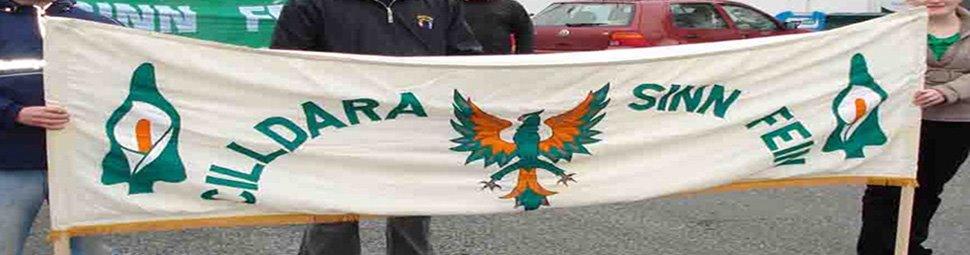
IN A letter to the Irish Times on May 5, 2012, Des Dalton, President, Republican Sinn Féin, said:
Sir, your editorial of May 1 entitled ‘Still a capacity for mayhem’ displayed an inability to draw any lessons from our history coupled with an unwillingness to even acknowledge the existence of, let alone engage with, the Éire Nua proposals for a Federal Ireland as a credible and coherent alternative to the present failed partitionist set-up.
In the past Republican Sinn Féin offered to engage in debate through the offices of your paper on the merits of the Éire Nua, an offer, which, sadly was not taken up.
You declare that Republicans who have rightly identified the failure of the Stormont Agreement to deliver a just and last peace for the people of Ireland “appear beyond talking to”. This is indicative of a mindset which in the past condemned generations of our people to conflict and war because of its unwillingness to engage with all of the issues including the fundamental cause of that conflict and war – that is continued British occupation and partition. It is in short the mentality which gave rise to the Section 31 broadcasting ban on Irish Republicans.
With honourable exceptions the mainstream media have simply parroted official line peddled by Stormont, Leinster House and Westminster that the Six-County state is now a normal democratic society. The reality is far removed from this. The Six-County State remains an undemocratic and sectarian statelet. The Stormont Assembly has an executive with no opposition while implementing a system which forces people to designate themselves along sectarian lines. The state itself continues to rely on draconian legislation, non-jury courts and a paramilitary police force to enforce its writ. The internment without-trial of Republican veterans such as Martin Corey and Marian Price along with the ongoing struggle for political status by the Republican prisoners in Maghaberry prison all point to the abnormality of this state.
In 1998 during the two state referenda on the Stormont Agreement and the amendment of Articles 2 and 3 of the 1937 26-County constitution Republican Sinn Féin pointed out that the agreement failed on two levels. 1. It failed to address the root cause of conflict in Ireland, which was and remains British rule and partition. 2. The agreement served only to institutionalise sectarianism and would lead only to an increased polarisation of the two communities. This is an analysis, which has been borne out by a number of independent studies including figures released by statutory bodies within the Six Counties.
As an alternative to all of this Republican Sinn Féin have consistently advocated the Éire Nua programme as a non-sectarian and democratic way forward. With its provision for decentralisation of decision making powers from national to provincial, to regional, right down to local or community level it gives all sections of the Irish people a real voice and involvement in the decisions that affect them. On each occasion these proposals have been put to unionists they have been acknowledged as a workable alternative and indeed your one of your columnists, David Adams writing in the Irish Times on December 3 2009 said that it was the only serious attempt to outline what a united Ireland would mean: “The Éire Nua document, authored by Ruairí Ó Brádaigh and Dáithí Ó Conaill in the 1970s, remains the only serious bid by any strand of nationalism or republicanism to address the issue at all.”
Éire Nua includes a Draft Charter of Rights and would include the European Convention on Human Rights in the domestic law of a New Ireland. In retrospect, the only problem with Éire Nua was that it was produced by the “wrong” people, those who have been labelled disturbers, subversives, dissidents and terrorists – all undesirables in the eyes of the Establishments. Yet, it has been admired and praised by many scholars and academics It needs to be promoted vigorously.
The old order is being questioned more and more, people are receptive to new ideas and the circumstances are opportune again. Republicans have never advocated simply attaching the Six Counties to the existing 26-County state. We believe both states are part of the same problem and have clearly failed. The Irish people are in need of a beacon of hope now more than ever and way out of the tired and failed politics of partition. At a time when we are being squeezed by the old imperialism of British Rule in the Six Counties and the new imperialism of the EU/IMF we believe Éire Nua along with our social and economic programme Saol Nua are a blueprint for making the All-Ireland Republic set out in the 1916 Proclamation a reality for all of the Irish people. As in the past we are proud to provide leadership based on principled and coherent policies.
May Day Address to the leadership and members of Irish Trade Union Movement
On this May Day we address ourselves to you on the urgent need for a vibrant and radical trade union movement. Working people in Ireland and across Europe are being sacrificed in order to bail out the failed neo-liberal economic model upon which the EU is based. The orthodoxy of the political and economic elites both here in Ireland and within the EU is to rebuild the collapsed structure of finance capitalism rather than deal with the human cost of that collapse. The legacy for future generations will be an inability to educate the young, care for the sick and provide for the old, the very markers of a civilised society. In Europe the resistance to this is growing as evidenced in Greece but also by the collapse of the government in Holland and the Presidential election in France.
Here in Ireland it is time for the trade union movement to take up the banner first held aloft by the founders of the movement a century ago. James Connolly’s words are as relevant today as when first penned in 1916: “The cause of labour is the cause of Ireland, the cause of Ireland is the cause of labour. They cannot be dissevered. Ireland seeks freedom. Labour seeks that an Ireland free should be the sole mistress of her own destiny, supreme owner of all material things within and upon her soil. Labour seeks to make the free Irish nation the guardian of the interests of the people of Ireland, and to secure that end would vest in that free Irish nation all property rights as against the claims of the individual, with the end in view that the individual may be enriched by the nation, and not by the spoiling of his fellows.” Or James Larkin in his address to the Irish Trades Union Congress in 1914: “I submit that the working class have as much right as any section or class in the community to enjoy all the advantages of science, art and literature. No field of knowledge, no outlook in life, and no book should be closed against the workers. We should demand our share in the effulgence of life and all that was created for the enjoyment of mankind.”
We applaud the stand taken by MANDATE, the TEEU, UNITE and CPSU in calling for a rejection of the Austerity Treaty in the referendum on May 31. We call on the rest of the trade union movement to take a similar position and join the campaign against this undemocratic power grab by the EU. By voting No the Irish people will be reaffirming in the words of the 1916 Proclamation: “The right of the people of Ireland to the ownership of Ireland.”
This decade will mark the centenaries of some of the defining moments in Irish Revolutionary history including the heroic 1913 Lockout as well as the 1916 Rising, both of which we will mark with pride. The trade union movement was in the vanguard of the forces of democracy and progress during those momentous years, 100 years later it must do so again if it is to retain its relevance to the working people of All-Ireland. The trade union movement must discard the language of conciliation with forces that will not be conciliated, it must speak with a language described by Sean O’Casey that is “not for an assignation with peace, dark obedience, or placid resignation, but trumpet-tongued of resistance to wrong, discontent with leering poverty, and defiance of any power strutting out to stand in the way of their march onward.”
Trade unions must once more be prepared to take on the forces of political reaction and capital and join the struggle for a New Ireland based on the principles of political, social and economic justice, freedom and democracy. James Connolly described Liberty Hall as the: “unconquered citadel of the Irish working class”, it is now time for the entire trade union movement to prove itself worthy of the proud legacy bequeathed to it by its unconquered and unconquerable forbearers. “The great appear great because we are on our knees, let us rise”.
Yours Fraternally
Is Mise
Des Dalton
An tUachtarán
An tUachtarán
Labels: Statements by Des Dalton
Artigos Relacionados:The Centenary of 1916 has real relevance for the Ireland of today
Speaking at Republican Sinn Féin’s seminar to launch its build-up to the Centenary of the 1916 Rising in 2016 entitled Who Fears To Speak of Easter Week which took place at the Ireland Institute’s Pearse House on Pearse St on Saturday April 21 the President of Republican Sinn Féin Des Dalton said:
“The build-up to Centenary of the 1916 Rising is rapidly developing into a battle over not only how we view our past but also the vision we have for our future. The purpose of today’s seminar is to begin the countdown to 2016 and in doing so set out the relevance of 1916 for the Ireland of today. The other speakers will cover aspects of the Rising such as the idea of the ‘prophetic shock minority’sparking the flames of revolution, and the 1916 Proclamation and its place in the Irish Republican tradition. Ruairí Og Ó Brádaigh is the editor of SAOIRSE. He is someone who has given much of his adult life in Republican activism and journalism. Ruán O’Donnell has brought to the study of Irish Revolutionary history great scholarship and attention to detail as evidenced in his numerous published works notably his masterful biography of Robert Emmet and most recently the first of his three volume study of Irish Republican prisoners in English jails from 1968 to 1998. On the basis of the first volume we eagerly await the next two!
“Speaking in UCD on May 20 2010 the then head of the 26-County administration Brian Cowen accused Irish Republicans of seeking to ‘hijack’ the centenary of the 1916 Rising. It is an accusation that has been oft repeated by other members of the 26-County political class, but it is an accusation that does not stand up. Republicans cannot hijack something they have never abandoned. Irish Republicans will commemorate the centenary of 1916 as well as the anniversaries of the other landmark events in Irish Revolutionary history, just as we have in the past.
“Each year Irish Republicans both in Ireland and abroad have commemorated 1916 without fail. The 26-County state on the other hand has alternated between ignoring the anniversary and banning any commemoration of it. 1916 commemorations throughout the 26 Counties were banned by the Dublin administration in 1937. In 1966 Republicans were baton charged in Dublin by the 26-County police. In 1976 Republicans were prosecuted – including Fiona Plunkett sister of Joseph Mary Plunkett - and some jailed for their participation in a banned commemoration at the GPO. Each year Republicans face the prospect of prosecution for the distribution of Easter Lilys. Despite this repression and repeated attempts at airbrushing the very spirit of 1916 from the collective memory a poll taken on the 75th anniversary of the Rising in 1991 showed 65% of people believed it should be commemorated.
“For forty years the 26-County administration ignored the anniversary of 1916 but since 2006 it has opportunistically seized on it in order to sell the big lie that history has come to an end and British rule in Ireland is now accepted.
“This is the crux of the issue, 1916 is not merely an historical event which can be taken down from the shelf every few years and dusted off like some neglected family heirloom, admired and then conveniently shelved again for another generation or two. It is an event which still speaks to the Ireland of the 21st Century. It is this fact which most unsettles the chattering classes in Leinster House and elsewhere. The speech by Stormont First Minster Peter Robinson marking the centenary of the signing of ‘Solemn League and Covenant’ in 1912 in the 26-County Department of Foreign Affairs on March 30 is the first step in a campaign to dilute and sanitise the Centenary of the 1916 Rising. The political establishments in Stormont, Leinster House and Westminster have signalled their intention to suppress any meaningful commemoration of the 1916 Rising by burying it in a celebration of the imperialist carnage of the First World War.
“The choice of the ‘Solemn League and Covenant’ to begin the ‘decade of commemoration’ the two partition states is in many ways quite apt as it symbolises the fundamental difference in the vision for Ireland held by Irish Republicans as opposed to the forces of represented in the ‘Solemn League and Covenant’. The ‘Solemn League and Covenant’ is written in the narrow, sectarian and patriarchal language of empire, while the 1916 Proclamation addresses itself to ‘Irishmen and Irishwomen’ in the inclusive language of democracy, progress and human freedom. A kind of state sponsored amnesia is employed in an attempt to erase the more uncomfortable aspects of our history. Those very aspects of 1916 that serve as a reminder of how far short the political establishment and the state over which they preside falls short of the ideals set out in the 1916 Proclamation. There is nothing new in this, writing about the 26-Couunty state’s attitude to the Golden Jubilee of the rising in 1966 Declan Kiberd observed that 1966 represented: ‘A last, over-the-top purgation of a debt to the past.’ The former curator of Irish Art at the National Gallery of Ireland Dr Sighle Bhreathnach-Lynch writing in History Ireland in its Spring 1997 edition said: ‘By concentrating solely on glorifying the past it could be quietly forgotten that the aims of those who had sacrificed their lives in the Rising had not yet been properly achieved. Leaders like Pearse and Connolly were promoted only for their military exploits. Their radical ideas on education and justice, as yet unattained, were not mentioned. This kind of simplistic approach, largely fostered by politicians and propagandists, did not encourage much critical exchange of ideas and as a result a mood of disenchantment quickly set in.’ The role of historians such as Ruán O’Donnell will be vital in the coming years in the battle to ensure a new generation is not robbed of their history or collective memory as a nation.
“Over the next four years the centenaries of the founding of the Irish Volunteers, the Irish Citizen Army and Cumann na mBan will be marked. Next year we will remember with pride the heroic 1913 Lockout. Therein is a message to the trade union leadership of today – another stark reminder of how far removed they are from the founding ideals of the trade union movement at precisely the moment when a vibrant and radical trade union movement is most required. Other anniversaries including the landing of the arms off the Asgard in 1914 and Pearse’s oration at the grave of O’Donovan Rossa act as milestones on the road to the centenary of the Rising. The years after 2016 will bring the centenaries of the historic 1918 General Election – the last occasion in which the Irish people acted as a unit in a single vote on the question of Ireland’s right to national independence. The Tan War, the British Government of Ireland Act which partitioned Ireland, the Treaty of Surrender and the subsequent Civil War or Counter-Revolution all will be reminders of where we have come from and how far we have still to travel.
“Irish Republicans unapologetically declare that 1916 will remain unfinished business while Ireland’s historic right to nationhood continues to be denied by either the old imperialism of British occupation or the new imperialism of the EU and IMF. This is the unpalatable truth that the establishment most fear in the message of 1916 and it is what gives 1916 its continued relevance for a new risen generation. 1916 remains unfinished business while Britain holds any part of Ireland.
The message of 1916 could not be clearer; ‘Ireland unfree shall never be at peace’. Starting today let us embark on a commemorative journey that rekindles the fires of revolution; political, social and economic, ideals and ideas which inspired the revolutionary generation of 1913-23. Let us proclaim to all that we still believe in the ‘The right of the people of Ireland to the ownership of Ireland.’”
“The build-up to Centenary of the 1916 Rising is rapidly developing into a battle over not only how we view our past but also the vision we have for our future. The purpose of today’s seminar is to begin the countdown to 2016 and in doing so set out the relevance of 1916 for the Ireland of today. The other speakers will cover aspects of the Rising such as the idea of the ‘prophetic shock minority’sparking the flames of revolution, and the 1916 Proclamation and its place in the Irish Republican tradition. Ruairí Og Ó Brádaigh is the editor of SAOIRSE. He is someone who has given much of his adult life in Republican activism and journalism. Ruán O’Donnell has brought to the study of Irish Revolutionary history great scholarship and attention to detail as evidenced in his numerous published works notably his masterful biography of Robert Emmet and most recently the first of his three volume study of Irish Republican prisoners in English jails from 1968 to 1998. On the basis of the first volume we eagerly await the next two!
“Speaking in UCD on May 20 2010 the then head of the 26-County administration Brian Cowen accused Irish Republicans of seeking to ‘hijack’ the centenary of the 1916 Rising. It is an accusation that has been oft repeated by other members of the 26-County political class, but it is an accusation that does not stand up. Republicans cannot hijack something they have never abandoned. Irish Republicans will commemorate the centenary of 1916 as well as the anniversaries of the other landmark events in Irish Revolutionary history, just as we have in the past.
“Each year Irish Republicans both in Ireland and abroad have commemorated 1916 without fail. The 26-County state on the other hand has alternated between ignoring the anniversary and banning any commemoration of it. 1916 commemorations throughout the 26 Counties were banned by the Dublin administration in 1937. In 1966 Republicans were baton charged in Dublin by the 26-County police. In 1976 Republicans were prosecuted – including Fiona Plunkett sister of Joseph Mary Plunkett - and some jailed for their participation in a banned commemoration at the GPO. Each year Republicans face the prospect of prosecution for the distribution of Easter Lilys. Despite this repression and repeated attempts at airbrushing the very spirit of 1916 from the collective memory a poll taken on the 75th anniversary of the Rising in 1991 showed 65% of people believed it should be commemorated.
“For forty years the 26-County administration ignored the anniversary of 1916 but since 2006 it has opportunistically seized on it in order to sell the big lie that history has come to an end and British rule in Ireland is now accepted.
“This is the crux of the issue, 1916 is not merely an historical event which can be taken down from the shelf every few years and dusted off like some neglected family heirloom, admired and then conveniently shelved again for another generation or two. It is an event which still speaks to the Ireland of the 21st Century. It is this fact which most unsettles the chattering classes in Leinster House and elsewhere. The speech by Stormont First Minster Peter Robinson marking the centenary of the signing of ‘Solemn League and Covenant’ in 1912 in the 26-County Department of Foreign Affairs on March 30 is the first step in a campaign to dilute and sanitise the Centenary of the 1916 Rising. The political establishments in Stormont, Leinster House and Westminster have signalled their intention to suppress any meaningful commemoration of the 1916 Rising by burying it in a celebration of the imperialist carnage of the First World War.
“The choice of the ‘Solemn League and Covenant’ to begin the ‘decade of commemoration’ the two partition states is in many ways quite apt as it symbolises the fundamental difference in the vision for Ireland held by Irish Republicans as opposed to the forces of represented in the ‘Solemn League and Covenant’. The ‘Solemn League and Covenant’ is written in the narrow, sectarian and patriarchal language of empire, while the 1916 Proclamation addresses itself to ‘Irishmen and Irishwomen’ in the inclusive language of democracy, progress and human freedom. A kind of state sponsored amnesia is employed in an attempt to erase the more uncomfortable aspects of our history. Those very aspects of 1916 that serve as a reminder of how far short the political establishment and the state over which they preside falls short of the ideals set out in the 1916 Proclamation. There is nothing new in this, writing about the 26-Couunty state’s attitude to the Golden Jubilee of the rising in 1966 Declan Kiberd observed that 1966 represented: ‘A last, over-the-top purgation of a debt to the past.’ The former curator of Irish Art at the National Gallery of Ireland Dr Sighle Bhreathnach-Lynch writing in History Ireland in its Spring 1997 edition said: ‘By concentrating solely on glorifying the past it could be quietly forgotten that the aims of those who had sacrificed their lives in the Rising had not yet been properly achieved. Leaders like Pearse and Connolly were promoted only for their military exploits. Their radical ideas on education and justice, as yet unattained, were not mentioned. This kind of simplistic approach, largely fostered by politicians and propagandists, did not encourage much critical exchange of ideas and as a result a mood of disenchantment quickly set in.’ The role of historians such as Ruán O’Donnell will be vital in the coming years in the battle to ensure a new generation is not robbed of their history or collective memory as a nation.
“Over the next four years the centenaries of the founding of the Irish Volunteers, the Irish Citizen Army and Cumann na mBan will be marked. Next year we will remember with pride the heroic 1913 Lockout. Therein is a message to the trade union leadership of today – another stark reminder of how far removed they are from the founding ideals of the trade union movement at precisely the moment when a vibrant and radical trade union movement is most required. Other anniversaries including the landing of the arms off the Asgard in 1914 and Pearse’s oration at the grave of O’Donovan Rossa act as milestones on the road to the centenary of the Rising. The years after 2016 will bring the centenaries of the historic 1918 General Election – the last occasion in which the Irish people acted as a unit in a single vote on the question of Ireland’s right to national independence. The Tan War, the British Government of Ireland Act which partitioned Ireland, the Treaty of Surrender and the subsequent Civil War or Counter-Revolution all will be reminders of where we have come from and how far we have still to travel.
“Irish Republicans unapologetically declare that 1916 will remain unfinished business while Ireland’s historic right to nationhood continues to be denied by either the old imperialism of British occupation or the new imperialism of the EU and IMF. This is the unpalatable truth that the establishment most fear in the message of 1916 and it is what gives 1916 its continued relevance for a new risen generation. 1916 remains unfinished business while Britain holds any part of Ireland.
The message of 1916 could not be clearer; ‘Ireland unfree shall never be at peace’. Starting today let us embark on a commemorative journey that rekindles the fires of revolution; political, social and economic, ideals and ideas which inspired the revolutionary generation of 1913-23. Let us proclaim to all that we still believe in the ‘The right of the people of Ireland to the ownership of Ireland.’”
Artigos Relacionados:
Republican Sinn Féin launch No to Fiscal Treaty website
As part of its campaign against the 26-County Austerity Treaty Republican Sinn Féin have launched a campaign website: www.nofiscaltreaty.net
The website provides up to date information on the campaign over the coming weeks.
Labels: No to Fiscal Treaty, Republican Sinn Féin
Artigos Relacionados:Fight against the privatisation of water and the introduction of water meters
Geraldine McNamara PRO of Republican Sinn Féin stated on April 17 that the decision by Leinster House representative Phil Hogan to hand over the water supply services to an Board Gáis is an absolute disgrace. This new company is to be known as Irish Water and is to supply water to householders in the 26 Counties.
“It beggar’s belief that the state can remove itself from the responsibility of supplying clean water to its people; clean water is a basic human right and should not be privatised,” Geraldine said.
“Since the collapse of the banking system, the 26-County administration is doing everything to support the bank bailout and is doing this to the determent of the most vulnerable in society. People are being told that on top of water charges they are going to have to pay to have water meters installed at a total charge of nearly €800. This, we are told, will be part of the standing charge and then we will have to pay for every drop of water used.
“This scheme should be resisted with even more gusto than the household tax and is another household charge.
“During the Celtic tiger years local councils were still deprived of finance to upgrade and repair water supply pipes and reservoirs. New housing estates were built with no thought as to the burden on existing water and sewage networks, now when there is a risk of drought here due to low rainfall Phil Hogan is taking advantage of people’s fears to transfer the public water supply into private hands at enormous cost to every individual in the state”.
Geraldine McNamara concluded: “We must fight against this backhanded scheme and keep our water supplied by local councils. Phil Hogan is using the water meter charge to distract people from the point that the supply will be privatised and that water will no longer be supplied free to all in society”.
“It beggar’s belief that the state can remove itself from the responsibility of supplying clean water to its people; clean water is a basic human right and should not be privatised,” Geraldine said.
“Since the collapse of the banking system, the 26-County administration is doing everything to support the bank bailout and is doing this to the determent of the most vulnerable in society. People are being told that on top of water charges they are going to have to pay to have water meters installed at a total charge of nearly €800. This, we are told, will be part of the standing charge and then we will have to pay for every drop of water used.
“This scheme should be resisted with even more gusto than the household tax and is another household charge.
“During the Celtic tiger years local councils were still deprived of finance to upgrade and repair water supply pipes and reservoirs. New housing estates were built with no thought as to the burden on existing water and sewage networks, now when there is a risk of drought here due to low rainfall Phil Hogan is taking advantage of people’s fears to transfer the public water supply into private hands at enormous cost to every individual in the state”.
Geraldine McNamara concluded: “We must fight against this backhanded scheme and keep our water supplied by local councils. Phil Hogan is using the water meter charge to distract people from the point that the supply will be privatised and that water will no longer be supplied free to all in society”.
Labels: Republican Sinn Féin
Artigos Relacionados:Easter Commemoration held in Naas
Republican Sinn Féin in Kildare held their annual 1916 commemoration at the grave of Martin O’Brien in St Corban’s cemetery in Naas at 12 Noon on Easter Sunday. The 1916 Proclamation as well as the Easter Statement from the leadership of the Republican Movement along with statements from the POWs in Maghaberry and Portlaoise Prisons were also read. A decade of the rosary was recited As Gaelige.
In his oration Republican Sinn Féin Ard Chomhairle member Matt Conway said: “We gather here today to remember the men and women who 96 years ago went out to strike a blow for Irish Freedom. The leaders of 1916 gave us the Proclamation of Easter Week. It is upon this historic declaration of the “right of the people of Ireland to the ownership of Ireland” that we take our stand, and it is from Ireland’s historic right to nationhood that we draw our mandate. That right to nationhood can never be extinguished ‘except by the destruction of the Irish people.’
“Here we are gathered at the grave of Martin O’Brien, a friend and comrade of the famous Kildare Republican Frank Driver. Martin O’Brien devoted his entire life to the cause of a free Ireland and for him that cause could only be completed when the 1916 Proclamation was made a reality. Martin O’Brien also wrote for the United Irishman paper under the name Conleth Martin. On this Easter day we are proud to remember his service to the All-Ireland Republic.
“For Irish Republicans the 1916 Rising is much more than an historical event, it represents the highest ideals of human and national freedom. While any part of Ireland remains under British occupation or any part of our sovereignty is claimed by an undemocratic European superstate 1916 will remain for us unfinished business.”
Wreaths were also placed on the Republican Plot in St Corban’s cemetery as well as Grey Abbey in Kildare Town. Wreaths were also placed on graves and monuments throughout Counties Kildare, Laois and Carlow.
In his oration Republican Sinn Féin Ard Chomhairle member Matt Conway said: “We gather here today to remember the men and women who 96 years ago went out to strike a blow for Irish Freedom. The leaders of 1916 gave us the Proclamation of Easter Week. It is upon this historic declaration of the “right of the people of Ireland to the ownership of Ireland” that we take our stand, and it is from Ireland’s historic right to nationhood that we draw our mandate. That right to nationhood can never be extinguished ‘except by the destruction of the Irish people.’
“Here we are gathered at the grave of Martin O’Brien, a friend and comrade of the famous Kildare Republican Frank Driver. Martin O’Brien devoted his entire life to the cause of a free Ireland and for him that cause could only be completed when the 1916 Proclamation was made a reality. Martin O’Brien also wrote for the United Irishman paper under the name Conleth Martin. On this Easter day we are proud to remember his service to the All-Ireland Republic.
“For Irish Republicans the 1916 Rising is much more than an historical event, it represents the highest ideals of human and national freedom. While any part of Ireland remains under British occupation or any part of our sovereignty is claimed by an undemocratic European superstate 1916 will remain for us unfinished business.”
Wreaths were also placed on the Republican Plot in St Corban’s cemetery as well as Grey Abbey in Kildare Town. Wreaths were also placed on graves and monuments throughout Counties Kildare, Laois and Carlow.
Labels: Centenary 1916-2016, Commemorations, Easter, Frank Driver Cumann, Myles Shevlin/Tony Ruane Cumann Co Carlow, Reports
Artigos Relacionados:1916 remains unfinished business
Speaking at the Republican Sinn Féin 1916 commemoration at the Republican Plot in Donaghpatrick cemetery, in Co Galway on Easter Sunday, April 8, the President of Republican Sinn Féin Des Dalton said:
“As Irish Republicans we are proud of the long tradition of revolutionary endeavour from which we draw our inspiration and guidance in matters of principle. The 1916 Rising is a pivotal event in that history, providing us with the founding document of the All-Ireland Republic, the Proclamation of Easter Week. It is upon this historic declaration of the ‘right of the people of Ireland to the ownership of Ireland’ that we take our stand, and it is from Ireland’s historic right to nationhood that we draw our mandate. That right to nationhood can never be extinguished ‘except by the destruction of the Irish people.’
“Here in Co Galway there is a proud tradition of resistance to the forces of the British Crown, it was in Aughrim in 1691 that the forces of Gaelic Ireland took their last major stand against the Sasanach. It was in Ballymoe in East Galway that Éamonn Ceannt one of the seven signatories first saw the light of day. Outside of Dublin Galway witnessed one of the more significant actions against British forces during Easter Week, 1916. With Liam Mellows in command the forces of the All-Ireland Republic ensured that in the words of C.Desmond Greaves: ‘From Oranmore to Ballinasloe, from Tuam to Kinvara, the King’s writ no longer ran on 600 miles of Irish soil.’ Through the following turbulent years of revolution more of Galway’s sons would make the supreme sacrifice in the cause of Irish Freedom, including the Loughnane brothers of Shanaglish, An t-Athair Micheal Ó Gríofa, at the hands of British forces. Later at the hands of the Free State the six martyrs at Tuam and Tony Darcy, who along with his comrade Séan Mac Neela of Co Mayo, died on hunger strike in Arbour Hill in 1940. All of these men died in defence of the All-Ireland Republic of Easter Week and in defiance of its enemies.
“In four years time we will be celebrating the centenary of the 1916 Rising. The speech by Stormont First Minster Peter Robinson marking the centenary of the signing of the so-called Ulster ‘Solemn League and Covenant’ in 1912 in the 26-County Department of Foreign Affairs on March 29 is merely the first step in a campaign to dilute and sanitise the Centenary of the 1916 Rising. The political establishments in Stormont, Leinster House and Westminster have signalled their intention to suppress any meaningful commemoration of the 1916 Rising by burying it in a celebration of the imperialist carnage of the First World War.
“The 1916 Proclamation and the so-called ‘Solemn League and Covenant’ symbolise the fundamental difference in the vision for Ireland held by Irish Republicans as opposed to the forces of imperialism. The ‘Solemn League and Covenant’ is written in the narrow, sectarian and patriarchal language of empire, while the 1916 Proclamation addresses itself to ‘Irishmen and Irishwomen’ in the inclusive language of democracy, progress and human freedom. In many respects the build-up to the Centenary of the 1916 Rising has become a battleground in the war between these competing visions of Ireland, between the imperialist past as represented by partition and increased subjugation by London and Brussels or the vision of hope and aspiration to a new and better Ireland as represented by the Proclamation of the All-Ireland Republic. Instead of the failed and corrupt Ireland of the Mahon and Moriarty tribunals or the institutional sectarianism of Stormont, 1916 represents an Ireland which guarantees religious and civil liberty and equal opportunities, an Ireland that cherishes ‘all of the children of the nation equally’. We in Republican Sinn Féin have the blueprint for such a New Ireland and it lies in our proposals for federal Ireland, ÉIRE NUA , providing for a truly demcratic and inclusive Ireland with maxium decentralisation of power and decision-making from national, right down to local and community level. Taken together with our social and economic programme SAOL NUA they contain the basis for making the All-Ireland Republic of Pearse and Connolly a reality for all of the Irish people. For Irish Republicans the 1916 Rising is much more than an historical event, it symbolises the highest ideals of human and national freedom. While any part of Ireland remains under British occupation or any vestige of our sovereignty is claimed by an undemocratic European superstate 1916 will remain unfinished business.
“The 1916 Rising represents a spirit of idealism and self-sacrifice that has rarely been more needed than in the present time. The Irish people are held in the grip of two imperialisms. In the Six Counties the old imperialism of British occupation and in the 26 Counties the new imperialism of the EU/IMF. Despite the best efforts of the apologists for British Rule in Stormont, Leinster House and Westminster to portray it otherwise, the reality of British Rule on the ground in the Six Occupied Counties as experienced by the nationalist community has not changed. The nationalist people of Lurgan and Craigavon live under a state of siege from the RUC/PSNI. Arbitrary house raids and arrests are the stock-in-trade of these latter day ‘Black-and-Tans’ as they enforce British Rule on the ground with the active support of the Provos. The revelation on Good Friday that four members of the British Colonial police were being suspended for the use of racist and sectarian language should not surprise anyone. The RUC/PSNI remains an institutionally sectarian force. Changing its name and cap badge does not change the nature of the RUC/PSNI, no more than the changing of the RIC to the RUC did in 1922. In Maghaberry prison young Irish Republican prisoners are locked in a struggle for the same right to political status for which Bobby Sands and his comrades died on hunger strike thirty-one years ago. The fact they have been forced to sustain a dirty protest for more than a year because of the intransigence of the Stormont regime, constitutes a gross violation of even the most basic of human rights. Today we salute the POWs in Maghaberry and pledge them our continued support and also we remember their comrades in Portlaoise prison who too are imprisoned because of their loyalty to the All-Ireland Republic. ‘We love them yet, we can`t forget, the Felons of our Land.’
“In the 26 Counties the political and finiancial elites of the 26 Counties are lining up with their masters in the EU/IMF to sacrifice their own people in order to bail-out the failed and undemocratic EU and its currency. The political elites of Leinster House and the EU have set the tone for the forthcoming referendum on the EU Austerity Treaty by threatening people with the supposed dire consequences of a rejection of the treaty. Fear and intimidation it seems are again to be the employed by the 26-County Administration and the EU as they attempt to steamroll the Irish people into giving away the last vestiges of independence. Off course we have heard it all before during the referenda on the Lisbon and Nice treaties. And on both occasions people were forced to vote again for treaties they had already rejected. The power elites of the EU are not interested in the will of the people but instead are intent on grabbing even more power using the fear of the people. In this they have willing collaborators in the political establishment of the 26-County State.
“Since the first referendum on joining the the then EEC in 1972 Republican Sinn Féin have warned of the consequences for Irish people of becoming entangled in this club of former imperial powers. Unfortunately what we warned of in terms of the consequences for our farming and fishing have been realised with the almost total loss of our fishing industry and the forcing of thousands of our people off the land. Today people are even being denied the right to cut their own turf. We salute and support the communities who are defying the dictats of Brussels in upholding the centuries long tradition of turf cutting in rural Ireland. The people of Ireland are beginning to stir themselves as we can see in the campaigns against the Septic Tank charge - in which our County Councillor here in Co Galway Tomás Ó Curraoin has splayed a leading role –as well as the campaign against the household tax. Again we salute all of those people who refused to be intimidated into registering or paying this unjust tax. It is time we all stood together and fought back, the old and the young, the employed and the unemployed, urban and rural Ireland. On May 31 we can send a clear signal to the political establishments in Leinster House and Brussels that we still believe the right of this and future generations to the ownership and sovereignty of our country by voting No to the Austerity Treaty.
“The attempted Anglicisation of Ireland is being stepped up. Last year we witnessed, at a cost of over €30 million, the visit to the 26 Counties of the Queen of England while this year it was announced that Fleadh Cheoil na hÉireann would be used next year to promote the designation of Derry, the historic Doire Cholm Cille as a ‘UK City of Culture’. Irish Republicans would welcome the holding of the Fleadh in Derry but not for the purpose of normalising British Rule. It is evident that the British state is now attempting to co-opt the three strands of a distinct Irish culture, our games, our music and our language in order to prop up British rule in Ireland. It has also been mooted that the Oireachtas festival –celebrating the Irish language – will also be held in Derry next year. In Newry recently the RUC/PSNI held an Irish language public meeting, using the language as a recruiting tool. However former British Secretary of State Peter Hain let ‘the cat out of the bag’ regarding the British governments real attitude to the language. The newspaper Gaelsceal reports Hain as admitting that the promises of an ‘Irish Language Act’ for the Six Counties was off set by moving its ratification from Westminster to Stormont where, Hain proclaimed there would be an ‘inbuilt majority’ against it. The Irish News columnist Patrick Murphy hit the nail on the head when he pointed out that while constitutional nationalism has now fully embraced British rule and thus is drifting from cultural nationalism, which still extols a sense of Irish separateness from Britain, the British Government recognises this: ‘If you were in Whitehall today trying to bed down the latest British victory in Ireland, you would bring cultural nationalism into line with political nationalism. That explains the political pressure to bring the Fleadh to a British government event in Ireland.’
“However in Derry on January 29 this year an alternative message was delivered loud and clear to the political establishments in Stormont, Westminster and Leinster House. People from Derry and throughout Ireland defied the political establishments of partitioned Ireland when they came out on to the streets of Derry to mark the 40th anniversary of Bloody Sunday. Three thousand people according to the Irish Times of January 30 made their presence felt in a dignified display of solidarity with the survivors and families of the victims of the British army’s massacre of civil rights marchers in Derry on January 30 1972. Their very presence tells us that the pulse of Irish nationality still beats strong despite the censorship and repression of Britain and its surrogates. Despite everything there remains ‘The risen people who shall take what ye would not give.’
“I can think of no more fitting way to conclude in this sacred place than with the words of Pádraig Mac Piarais. Speaking at the grave of O’Donovan Rossa he warned the occupiers of our country: ‘Rulers and Defenders of Realms had need to be wary if they would guard against such processes. Life springs from death: and from the graves of patriot men and women spring living nations. The Defenders of this Realm have worked well in secret and in the open. They think that they have pacified Ireland. They think that they have purchased half of us and intimidated the other half. They think that they have foreseen everything, think that they have provided against everything; but the fools, the fools, the fools! — they have left us our Fenian dead, and, while Ireland holds these graves, Ireland unfree shall never be at peace.’”
An Phoblacht Abú!
“As Irish Republicans we are proud of the long tradition of revolutionary endeavour from which we draw our inspiration and guidance in matters of principle. The 1916 Rising is a pivotal event in that history, providing us with the founding document of the All-Ireland Republic, the Proclamation of Easter Week. It is upon this historic declaration of the ‘right of the people of Ireland to the ownership of Ireland’ that we take our stand, and it is from Ireland’s historic right to nationhood that we draw our mandate. That right to nationhood can never be extinguished ‘except by the destruction of the Irish people.’
“Here in Co Galway there is a proud tradition of resistance to the forces of the British Crown, it was in Aughrim in 1691 that the forces of Gaelic Ireland took their last major stand against the Sasanach. It was in Ballymoe in East Galway that Éamonn Ceannt one of the seven signatories first saw the light of day. Outside of Dublin Galway witnessed one of the more significant actions against British forces during Easter Week, 1916. With Liam Mellows in command the forces of the All-Ireland Republic ensured that in the words of C.Desmond Greaves: ‘From Oranmore to Ballinasloe, from Tuam to Kinvara, the King’s writ no longer ran on 600 miles of Irish soil.’ Through the following turbulent years of revolution more of Galway’s sons would make the supreme sacrifice in the cause of Irish Freedom, including the Loughnane brothers of Shanaglish, An t-Athair Micheal Ó Gríofa, at the hands of British forces. Later at the hands of the Free State the six martyrs at Tuam and Tony Darcy, who along with his comrade Séan Mac Neela of Co Mayo, died on hunger strike in Arbour Hill in 1940. All of these men died in defence of the All-Ireland Republic of Easter Week and in defiance of its enemies.
“In four years time we will be celebrating the centenary of the 1916 Rising. The speech by Stormont First Minster Peter Robinson marking the centenary of the signing of the so-called Ulster ‘Solemn League and Covenant’ in 1912 in the 26-County Department of Foreign Affairs on March 29 is merely the first step in a campaign to dilute and sanitise the Centenary of the 1916 Rising. The political establishments in Stormont, Leinster House and Westminster have signalled their intention to suppress any meaningful commemoration of the 1916 Rising by burying it in a celebration of the imperialist carnage of the First World War.
“The 1916 Proclamation and the so-called ‘Solemn League and Covenant’ symbolise the fundamental difference in the vision for Ireland held by Irish Republicans as opposed to the forces of imperialism. The ‘Solemn League and Covenant’ is written in the narrow, sectarian and patriarchal language of empire, while the 1916 Proclamation addresses itself to ‘Irishmen and Irishwomen’ in the inclusive language of democracy, progress and human freedom. In many respects the build-up to the Centenary of the 1916 Rising has become a battleground in the war between these competing visions of Ireland, between the imperialist past as represented by partition and increased subjugation by London and Brussels or the vision of hope and aspiration to a new and better Ireland as represented by the Proclamation of the All-Ireland Republic. Instead of the failed and corrupt Ireland of the Mahon and Moriarty tribunals or the institutional sectarianism of Stormont, 1916 represents an Ireland which guarantees religious and civil liberty and equal opportunities, an Ireland that cherishes ‘all of the children of the nation equally’. We in Republican Sinn Féin have the blueprint for such a New Ireland and it lies in our proposals for federal Ireland, ÉIRE NUA , providing for a truly demcratic and inclusive Ireland with maxium decentralisation of power and decision-making from national, right down to local and community level. Taken together with our social and economic programme SAOL NUA they contain the basis for making the All-Ireland Republic of Pearse and Connolly a reality for all of the Irish people. For Irish Republicans the 1916 Rising is much more than an historical event, it symbolises the highest ideals of human and national freedom. While any part of Ireland remains under British occupation or any vestige of our sovereignty is claimed by an undemocratic European superstate 1916 will remain unfinished business.
“The 1916 Rising represents a spirit of idealism and self-sacrifice that has rarely been more needed than in the present time. The Irish people are held in the grip of two imperialisms. In the Six Counties the old imperialism of British occupation and in the 26 Counties the new imperialism of the EU/IMF. Despite the best efforts of the apologists for British Rule in Stormont, Leinster House and Westminster to portray it otherwise, the reality of British Rule on the ground in the Six Occupied Counties as experienced by the nationalist community has not changed. The nationalist people of Lurgan and Craigavon live under a state of siege from the RUC/PSNI. Arbitrary house raids and arrests are the stock-in-trade of these latter day ‘Black-and-Tans’ as they enforce British Rule on the ground with the active support of the Provos. The revelation on Good Friday that four members of the British Colonial police were being suspended for the use of racist and sectarian language should not surprise anyone. The RUC/PSNI remains an institutionally sectarian force. Changing its name and cap badge does not change the nature of the RUC/PSNI, no more than the changing of the RIC to the RUC did in 1922. In Maghaberry prison young Irish Republican prisoners are locked in a struggle for the same right to political status for which Bobby Sands and his comrades died on hunger strike thirty-one years ago. The fact they have been forced to sustain a dirty protest for more than a year because of the intransigence of the Stormont regime, constitutes a gross violation of even the most basic of human rights. Today we salute the POWs in Maghaberry and pledge them our continued support and also we remember their comrades in Portlaoise prison who too are imprisoned because of their loyalty to the All-Ireland Republic. ‘We love them yet, we can`t forget, the Felons of our Land.’
“In the 26 Counties the political and finiancial elites of the 26 Counties are lining up with their masters in the EU/IMF to sacrifice their own people in order to bail-out the failed and undemocratic EU and its currency. The political elites of Leinster House and the EU have set the tone for the forthcoming referendum on the EU Austerity Treaty by threatening people with the supposed dire consequences of a rejection of the treaty. Fear and intimidation it seems are again to be the employed by the 26-County Administration and the EU as they attempt to steamroll the Irish people into giving away the last vestiges of independence. Off course we have heard it all before during the referenda on the Lisbon and Nice treaties. And on both occasions people were forced to vote again for treaties they had already rejected. The power elites of the EU are not interested in the will of the people but instead are intent on grabbing even more power using the fear of the people. In this they have willing collaborators in the political establishment of the 26-County State.
“Since the first referendum on joining the the then EEC in 1972 Republican Sinn Féin have warned of the consequences for Irish people of becoming entangled in this club of former imperial powers. Unfortunately what we warned of in terms of the consequences for our farming and fishing have been realised with the almost total loss of our fishing industry and the forcing of thousands of our people off the land. Today people are even being denied the right to cut their own turf. We salute and support the communities who are defying the dictats of Brussels in upholding the centuries long tradition of turf cutting in rural Ireland. The people of Ireland are beginning to stir themselves as we can see in the campaigns against the Septic Tank charge - in which our County Councillor here in Co Galway Tomás Ó Curraoin has splayed a leading role –as well as the campaign against the household tax. Again we salute all of those people who refused to be intimidated into registering or paying this unjust tax. It is time we all stood together and fought back, the old and the young, the employed and the unemployed, urban and rural Ireland. On May 31 we can send a clear signal to the political establishments in Leinster House and Brussels that we still believe the right of this and future generations to the ownership and sovereignty of our country by voting No to the Austerity Treaty.
“The attempted Anglicisation of Ireland is being stepped up. Last year we witnessed, at a cost of over €30 million, the visit to the 26 Counties of the Queen of England while this year it was announced that Fleadh Cheoil na hÉireann would be used next year to promote the designation of Derry, the historic Doire Cholm Cille as a ‘UK City of Culture’. Irish Republicans would welcome the holding of the Fleadh in Derry but not for the purpose of normalising British Rule. It is evident that the British state is now attempting to co-opt the three strands of a distinct Irish culture, our games, our music and our language in order to prop up British rule in Ireland. It has also been mooted that the Oireachtas festival –celebrating the Irish language – will also be held in Derry next year. In Newry recently the RUC/PSNI held an Irish language public meeting, using the language as a recruiting tool. However former British Secretary of State Peter Hain let ‘the cat out of the bag’ regarding the British governments real attitude to the language. The newspaper Gaelsceal reports Hain as admitting that the promises of an ‘Irish Language Act’ for the Six Counties was off set by moving its ratification from Westminster to Stormont where, Hain proclaimed there would be an ‘inbuilt majority’ against it. The Irish News columnist Patrick Murphy hit the nail on the head when he pointed out that while constitutional nationalism has now fully embraced British rule and thus is drifting from cultural nationalism, which still extols a sense of Irish separateness from Britain, the British Government recognises this: ‘If you were in Whitehall today trying to bed down the latest British victory in Ireland, you would bring cultural nationalism into line with political nationalism. That explains the political pressure to bring the Fleadh to a British government event in Ireland.’
“However in Derry on January 29 this year an alternative message was delivered loud and clear to the political establishments in Stormont, Westminster and Leinster House. People from Derry and throughout Ireland defied the political establishments of partitioned Ireland when they came out on to the streets of Derry to mark the 40th anniversary of Bloody Sunday. Three thousand people according to the Irish Times of January 30 made their presence felt in a dignified display of solidarity with the survivors and families of the victims of the British army’s massacre of civil rights marchers in Derry on January 30 1972. Their very presence tells us that the pulse of Irish nationality still beats strong despite the censorship and repression of Britain and its surrogates. Despite everything there remains ‘The risen people who shall take what ye would not give.’
“I can think of no more fitting way to conclude in this sacred place than with the words of Pádraig Mac Piarais. Speaking at the grave of O’Donovan Rossa he warned the occupiers of our country: ‘Rulers and Defenders of Realms had need to be wary if they would guard against such processes. Life springs from death: and from the graves of patriot men and women spring living nations. The Defenders of this Realm have worked well in secret and in the open. They think that they have pacified Ireland. They think that they have purchased half of us and intimidated the other half. They think that they have foreseen everything, think that they have provided against everything; but the fools, the fools, the fools! — they have left us our Fenian dead, and, while Ireland holds these graves, Ireland unfree shall never be at peace.’”
An Phoblacht Abú!
Labels: Centenary 1916-2016, Commemorations, Easter, Statements by Des Dalton
Artigos Relacionados:Who Fears to Speak of Easter Week? (Seminar, Dublin)
Labels: Centenary 1916-2016, Events, Leinster, Republican Sinn Féin
Artigos Relacionados:
Abonnieren
Posts (Atom)