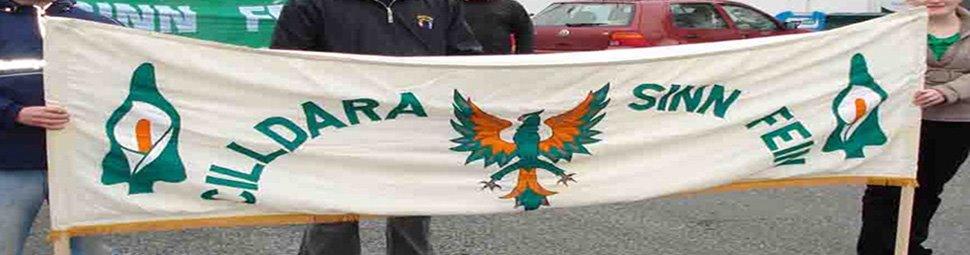
Cill Dara Shinn Féin Poblachtach

Paul Stanley

REPUBLICANS in Co Kildare and indeed throughout Ireland were saddened to learn of the death of Paul Stanley, of Straffan, Co Kildare on September 17

Paul Stanley joined the Republican Movement in 1956 and gave a lifetime of unbroken service and loyalty to the All-Ireland Republic.

Paul played his part in history and involved in fulfilling the wishes of Mayo hunger striker Frank Stagg to be buried in the Republican Plot of Leigue Cemetery, Ballina alongside his comrade Michael Gaughan.

Frank Stagg had endured four hunger strikes in British prisons resisting the criminalisation of Republican prisoners. On February 12, 1976 he died in Wakefield prison in England on his 62nd day of hunger strike. In an episode that will forever live in infamy the 26-County State stole the body from his family and comrades and under military guard buried Frank Stagg under concrete in a grave purchased by the 26-County administration.

Paul Stanley was determined that the wishes of the hunger striker to be buried with his comrade would be honoured. On the night of November 5, 1977 Paul and a close band of friends and comrades of Frank Stagg removed his body from beneath the Free State concrete and placed it alongside his fellow Mayo hunger striker Michael Gaughan in the Republican Plot.

To the end Paul Stanley was an unbroken and unbreakable Republican. His other passions are greyhounds and the GAA. He played for Straffan for many years, winning Junior A and B championships with them. He also wore the lilywhite of Kildare playing Junior football. He is a grandnephew of the famous athlete and Kildare All-Ireland winning footballer Larry Stanley.

On September 20 Paul Stanley’s coffin covered in the National Flag and his beret and gloves, led by a man in uniform carrying the Tricolour furled and by a piper and flanked by a guard of honour of his comrades was brought to the church in Straffan for his funeral Mass. At the church a large contingent from the local GAA club flanked the coffin into the church.

His comrade and friend, George Stagg, from Longwood, Co Meath, brother of hunger striker Frank Stagg, paid a warm tribute to Paul following the Requiem Mass.

He was carried to his resting-place in the adjoining cemetery by family, comrades and friends, again led by the furled Tricolour and flanked by a guard of honour.

At the graveside Matt Conway introduced President of Republican Sinn Féin, Des Dalton, who gave the oration at Paul’s request. He said:

“We come to mourn the passing of Paul Stanley but also to celebrate his life and the principles which guided him throughout that life. Paul Stanley gave a lifetime of loyal, committed and dedicated service to the Republican Movement and the cause of the All-Ireland Republic of Easter Week.

“Loyalty is a word which can be used to sum up Paul Stanley. Loyalty to his family, his club and community, his county and his country. He took great pride in all that is native to Ireland and expressed this in his membership of the Republican Movement and the GAA.

“Paul devoted his adult life to the cause of the full freedom of Ireland. Legendary Kildare Republicans such as Frank Driver were an inspiration to Paul in joining the struggle against British Rule in Ireland. Throughout his 54 years of active service Paul never deviated or wavered in his commitment to the historic Irish nation and its right to national independence. Paul was a Fenian in the truest mean of all that name represents.

“On the two occasions during Paul’s life when elements attempted to steer the Republican Movement off the straight path and down the cul-de-sac of reformism Paul Stanley was never in any doubt as to what was right. Paul Stanley was an Irish Republican and like the great Liam Lynch he had declared for a Republic and would not “live under any other law.”

“Paul Stanley was one of those unassuming people who have always provided the backbone of Republican Movement, the quiet people who just get on with the work and for whom no task is too big or small. It is because of people like Paul Stanley that the Republican Movement has endured throughout the centuries and is passed on to another generation today. Pearse said: “Our patriotism is measured not by the formula in which we declare it, but by the service which we render.”

“Other names may be emblazoned across the pages of history but standing shoulder to shoulder with them is men and women like Paul Stanley. Paul was associated with many leading Republicans but was particularly proud to number among these the late Dáithi Ó Conaill.

“Paul Stanley was not content to merely witness history but was always ready for the call to duty and played his part in shaping that history.

“Loyalty was Paul Stanley’s watchword and was the measure of the man. It was such loyalty that led Paul to play his part ensuring the wishes of a Hunger Striker were honoured. Paul only broke his silence of thirty three years about his role this year when he was the Lenister Honouree of the Irish Republican Prisoners Dependants CABHAIR. Paul took immense pride in his role in fulfilling the dying wish of Mayo Hunger Striker Frank Stagg to be buried in the Republican Plot of Leigue Cemetery, Ballina alongside his comrade Michael Gaughan.

“Frank Stagg had endured four hunger strikes in British prisons resisting the criminalisation of Republican prisoners. On February 12 1976 he died in Wakefield prison in England on his 62nd day of hunger strike. In an episode that will forever live in infamy the 26-County state stole the body from his family and comrades and under military guard buried Frank Stagg under concrete in a grave purchased by the 26-County administration.

“Paul Stanley was determined that the wishes of the hunger striker to be buried with his comrade would be honoured. On the night of November 5, 1977 Paul and a close band of friends and comrades of Frank Stagg removed his body from beneath the Free State concrete and placed it alongside his fellow Mayo hunger striker Michael Gaughan in the Republican Plot.

Exhumed in glory A November moon was drifting
And freedom’s light aglow
When some IRA had gathered in a graveyard in Mayo.
Those brave Irish Freedom fighters.
Who came together in the West.
Had come to fill the promise to lay Frank Stagg at rest.

“I too am proud to have known Paul Stanley and to have regarded him as a comrade over the past 21 years. When I joined the Republican Movement in Co Kildare it was people like Paul Stanley who for me set the standard for devotion and loyalty to the cause of Irish freedom and a New Ireland. Paul Stanley was an unbroken and unbreakable Republican

“On behalf of Republican Sinn Féin I extend deepest sympathy to Paul’s wife Alice-who was no less loyal or devoted in supporting the same cause and the same principles - his children and grandchildren.

“May the soil of your beloved Co Kildare rest lightly on you Paul. It can truly be said you were a faithful soldier of the All-Ireland Republic. When we march to the dawn light of freedom the spirit of Paul Stanley will march with us.

“Ar dheis Dé go raibh a anam dilis.”

Final honours were paid to Paul Stanley on September 29 when a firing party fired a volley of shots over his grave.

Bookmark and Share

Survey shows significant section of Irish people oppose British rule

Statement by the President of Republican Sinn Féin Des Dalton

Statement in German . . .
Statement in French . . .

The study carried out by Jonathan Tonge - Professor of Politics Studies and Head of the Department of Politics Studies at the University of Liverpool – confirms the fact that there remain a significant section of the Irish people who oppose British rule in Ireland.

The survey’s findings that 14% of nationalists express sympathy for the reasons for continued resistance to British occupation reflects the historical levels of consistent support for the struggle against British rule in Ireland. The two state referenda on the amendments to Articles 2 and 3 of the 1937 Constitution and the Stormont Agreement in the 26 and six counties respectively in 1998 reflected a largely similar figure of opposition to partition and British rule.

Prof Tonge said the survey was designed to test the claim that 99.9% opposed continued opposition to British rule. He said it is now untrue to say that Irish Republicans who oppose continued British rule have no support.

Overall the survey does nothing more than bear out the lesson of Irish history. Despite the active opposition and condemnation of resistance to British rule from the political establishments in Leinster House, Stormont, Westminster, Washington and Brussels as well as most of the media there remains a section of the Irish people who refuse to be either purchased or intimidated into accepting the partition or British occupation of their country.

Críoch/Ends.

Bookmark and Share

'Thou art not conquered yet dear land’ – a century of protest

Bobby Sands Lecture delivered by the President of Republican Sinn Féin Des Dalton in Dublin, Monday, September 13.

THE prospect of a visit by the Queen of England to the 26 Counties next year has sparked debate on what the response should be to such a visit. The purpose of the visit is clear. It marks the culmination of an ongoing campaign to anglicise and pacify Ireland. The message, which is intended, is that Ireland and the Irish people now accept partition and British rule in the northeastern corner of Ireland.

Republicans rightly view such a visit as part of an orchestrated campaign to deny the reality of the British occupation of Ireland. A visit by the Queen of England - who claims the style and title of ‘Queen of Great Britain and Northern Ireland’ - to any part of Ireland is part of the process of bedding down the institutions of British rule in Ireland. British rule remains the source of conflict in Ireland and while it remains relations between our countries can never be normal.

Just as the reality of British imperialism is unchanging the tactics employed by it and its minions have not changed greatly either. At the beginning of the 20th Century visits by the head of the British state to Ireland were used as a weapon to reinforce the notion in the minds of the Irish people and world opinion that Ireland was an integral part of the ‘United Kingdom of Great and Ireland’.

Beginning with protests at celebration of the Diamond Jubilee of Queen Victoria in 1897. As part of the demonstrations to counter this event in Ireland Maud Gonne got use of a window of the National Club in Parnell Square from which were displayed on a big screen photos of evictions and patriots executed during Victoria’s reign. A parade of black flags with figures in white of the number that died of starvation during Victoria’s reign was carried as well as a coffin representing the British Empire. The march was held to coincide with a meeting of the 1798 Centenary Committees, which brought delegates from all over Ireland.

On O’Connell Bridge fierce fighting broke out in resistance to the British Colonial police. Connolly was arrested and the Coffin was thrown into the Liffey to shouts of “Here goes the British Empire. To hell with the British Empire”. Outside of the National Club in Parnell Square – where the magic lantern show was taking place- a baton charge resulted in the death of a woman.

The advanced political forces led by the IRB, the emergent Irish cultural and language movement went on in the Centenary celebrations of the 1798 Rising the following year to build a platform from which could be launched in the coming decades a vibrant and revolutionary national movement.

Opposition to the Boer war and recruitment for the British Army provided fresh impetuous. An Irish Transvaal Committee was formed led by people such as Arthur Griffith, William Rooney and Maud Gonne. Leading Fenians such as John O’Leary and Dr Mark Ryan also lent it moral as well as material support. Public meetings were held the most famous of which at Beresford Place let to a riot. The meeting was banned and all the speakers threatened with arrest. Several speakers failed to turn up but James Connolly, Maud Gonne, John O’Leary and Pat O’Brien who was subbing for Michael Davitt all decided to go ahead with the meeting. An attempt to block the progress of the speakers was foiled when James Connolly grabbed the reins of the carriage and forced their way through to Beresford Place.

These events shook the guardians of the British Empire and it was believed a visit by the Queen of England in 1900 would serve to bolster its foundations in Ireland. The work of the Irish Transvaal Committee was having an effect: recruitment to the British Army was at a standstill and it was believed that such a visit would revive it. In a letter to the Daily Express W B Yeats declared: “whoever stands by the roadway cheering for Queen Victoria cheers for the Empire, dishonours Ireland, and condones a crime”. Again the visit was met with protests, riot and arrests.

In the edition of April 7 of the United Irishman – which was banned - the first section of an article the remainder of which appeared in the issues of April 21 and 28 was carried entitled ‘The Famine Queen’: ‘The Queen’s visit to Ireland is in no way political,’ proclaims the Lord Lieutenant, and the English ministers. ‘The Queen’s visit has no political significance, and the Irish nation must receive her Majesty with the generous hospitality for which it is celebrated,’ hastens to repeat Mr John Redmond, and our servile Irish members whose nationality has been corrupted by a too lengthy sojourn in the enemy’s country.

‘The Queen’s visit to Ireland has nothing at all to do with politics,’ cries the fishmonger, Pile, whose ambitious soul is not satisfied by the position of Lord Mayor and who hankers after an English title.

“Let us to our knees, and present the keys of the city to her Most Gracious Majesty, and compose an address in her honour.’

“Nothing political! Nothing political! Let us present an address to this virtuous lady,’ echo 30 town councillors, who when they sought the votes of the Dublin people called themselves Irishmen and Nationalists, but who are overcome by royal glamour. Poor citizens of Dublin! Your thoughtlessness in giving your votes to these miserable creatures will cost you dear. It has already cost the arrests of sixteen good and true men, and many broken heads and bruised limbs from police batons, for you have realised – if somewhat late – the responsibility of Ireland’s capital, and, aghast at the sight of the men elected by you betraying and dishonouring Ireland, you have, with a courage which makes us all proud of you, raised a protest, and cried aloud, ‘The visit of the Queen of England is a political action, and if we accord her a welcome we shall stand shamed before the nations. The world will no longer believe in the sincerity of our demand for National Freedom.”

The article concludes: “Taking the Shamrock in her withered hand she dares to ask Ireland for soldiers – for soldiers to protect the exterminators of their race! And the reply of Ireland comes sadly but proudly, not through the lips of the miserable little politicians who are touched by the English canker but through the lips of the Irish people.
“Queen, return to your own land; you will find no more Irishmen ready to wear the red shame of your livery. In the past they have done so from ignorance, and because it is hard to die of hunger when one is young and strong and the sun shines, but they shall do so no longer; see! Your recruiting agents return unsuccessful and alone from my green hills and plains, because once more hope has revived, and it will be in the ranks of your enemies that my children will find employment and honour! As to those who today enter your service to help in your criminal wars, I deny them! If they die, if they live, it matters not to me, they are no longer Irishmen.”

One of the devices used to show support for the visit was the organisation of a free picnic or ‘treat’ for children in the Phoenix Park. 5,000 children –rounded up from the city’s schools. An article in the United Irishman complained that nationalists had made no effort to organise a similar event for children. This struck a chord.

Groups such as the Ladies Committee of the Wolfe Tone Committees formed the Ladies Committee of the Patriotic Children’s Treat. Donations poured in from all over. Cakes, buns casks of lemonade and ginger beer. Shops all over Dublin donated as well as John Daly’s bakery in Limerick. Anna Parnell was among those who contributed towards the cost of the day. By June 30 25,000 children had been registered at the offices of the Celtic Literary Society to take part in ‘treat’. Originally it was intended to hold the event at Bodenstown but due to the size of the event it was decided to accept the offer of the owner of Clonturk Park to hold it there.

The children paraded through the streets of Dublin while men from the Celtic Literary Society and the GAA acted as stewards. Many held up green cards proclaiming: “Irish Patriotic Children’s Treat – no flunkeyism here”.

In her address Maud Gonne told the children that their presence revived hopes in nationalists’ hearts, which were sad from weary struggle. She hoped that Ireland would be free by the time they had grown up, so that they could put their energies into building up a free nation and not the “arid task of breaking down an old tyranny.”

In her autobiography A Servant of the Queen Maud Gonne wrote: “The Patriotic Children’s treat became legendary in Dublin and, even now, middle-aged men and women come up to me in the streets and say: ‘I was one of the patriotic children at your party when Queen Victoria was over.’”

Writing in the Worker’s Republic James Connolly in an article entitled The Coming Generation described the day:

“Last week we witnessed in Dublin the first political parade of the coming generation.
“Between twenty-five and thirty thousand children turned out and walked in processional order through the streets of the city, to show the world that British Imperialism had cast no glamour over their young minds.

“And that in the person of Her Britannic Majesty they recognised only a woman – no better than the mothers who bore them, if as good.

“It was a great sight to see the little rebels taking possession of the city – a sight more promising for the future of the country than any we can remember.

In 1902 a second British Royal visit was proposed. Rumours of such a visit were circulating for some time – not unlike today - Inghinidhe na hEireann circulated leaflets to women voters in the 1902 local elections urging not to vote for anyone who had welcomed Queen Victoria in 1900. This visit took place in July 1903.

Although it would be another year before the visit they were the first to organise protests. The forces of nationalist were determined to mount even bigger protests and were more confident of their ability to do so.

Again it was met by protests and marches in Dublin and on the Falls Road in Belfast. Another children’s ‘treat’ was held which despite shorter notice and less organisation than the previous time, which attracted 15,000 children as opposed to 9,000 in the Phoenix Park for a loyalist gathering.

The most significant achievement of the national forces came following what has become known as the battle of the Rotunda. Applications for membership came from Glasgow; Manchester while Anna Parnell was an early supporter.

As soon as news of the impending visit was made public, Edward Martyn, the playwright and first President of Sinn Féin wrote a letter of protest, “It is for Nationalist Ireland to…. tell the government (British) with one voice that if they bring the King here under any other guise than as a restorer of our stolen constitution they will regret their rashness”.

On May 9 Arthur Griffith published inside information, which claimed that an address of welcome to the King of England would be placed on the agenda of Dublin Corporation. The Lord Mayor Tim Harrington a prominent member of the Irish Home Rule Party had arranged to be out of the city when the vote would be taken.

It was decided to confront Harrington and force his hand as to whether he supported such a welcome. Tim Harrington was advertised as chairing a meeting of the United Irish League in Dublin’s Rotunda. The opportunity was sized.

The delegation chosen to carry out this task was from the ‘People’s Protection Committee’. This committee was formed to ensure people would not be coerced into supporting the visit. Maud Gonne’s description of the scenes, which unfolded, cannot be bettered.

The result of this was a series of meetings to protest against any address of welcome being voted by Dublin Corporation. When the Corporation met in July finally met to vote the motion in proposing an address of welcome was defeated by three votes. As she left the building Maud Gonne was cheered to the rafters. According to the account in the United Irishman: “For the first time since the Norman invasion the capital has denied before the world the right of the King of England to rule this country.”

A body called the National Council was formed during the protest to coordinate activities. Both Home Rulers and nationalists were welcome to join provided they believed in the “absolute independence of the country.” The National Council would be one of the organisations which formed the nucleus of Sinn Féin in 1905.

By 1911 another visit by a British Monarch helped sharpen the cutting edge of Republican and progressive forces. Sinn Féin formed a United National Societies Committee with Michael O’Rahilly (The O’Rahilly) as secretary. This brought together Sinn Féin, the United Irish League, Wolfe Tone Clubs (dominated by the IRB) and the Ancient Order of Hibernians, co-ordinating opposition to the visit. A ‘monster’ meeting was held in Beresford Place to demonstrate opposition to any address of welcome to the British King. The meeting was set for June 22 to coincide with the coronation of the new King and which was an enforced Bank Holiday.

All members of Dublin Corporation were canvassed. Constance Markievicz, Patrick MacCartan and The O’Rahilly led this. O’Rahilly also canvassed his own local Pembroke Urban District Council in the heart of Unionist South Dublin as well as Waterford Corporation. The result was that all of these bodies refused to issue formal addresses of welcome to the British King.

A major coup for the committee was when O’Rahilly obtained permission from the Corporation’s paving committee for permission to erect two poles across Grafton St through which the British King was due to pass. A green and gold banner was strung across between the poles declaiming, “Thou art not conquered yet dear land”. Lines from O’Rahilly’s poem. The poles and the message they supported were only noticed on the morning of the procession and were torn down. In their zeal the DMP (Dublin Metropolitan Police) also tore down decorations declaring their loyalty to the British Crown. The illegal seizure brought more publicity than if the poles had been left in place.

The meeting in Beresford Place brought 30,000 people –the largest gathering in the city since Parnell’s meeting in Inchicore in 1891. The O’Rahilly as secretary read telegrams of support from prominent Fenians such as John Devoy, John Daly, Robert Johnston of Belfast and Dr Mark Ryan in London, both of whom were 25 years on the Supreme Council of the IRB. The chair of the meeting was the veteran Henry Dixon (Who later would be the oldest internee in Frongoch following the 1916 Rising) The meeting was addressed by Major John MacBride, Laurence Ginnell MP, Constance Markievicz, Arthur Griffith, James Connolly and Cathal Brugha.

The women of Inghinidhe na hEireann together with James Connolly’s Socialist Party of Ireland together organised a public meeting in Foster Place addressed by James Connolly and Helena Moloney. A pamphlet by Connolly addressed the reasons for protest: “Knowing from previous experience of Royal Visits, as well as from the Coronation orgies of the past few weeks, that the occasion will be utilised to make propaganda on behalf of royalty and aristocracy against the oncoming forces of democracy and National freedom, we desire to place before you some few reasons why you should unanimously refuse to countenance this visit, or to recognise it by your presence at its attendant processions or demonstrations”. Among the reasons, which included a rejection of monarchy in all its forms were: “There is nothing on earth more sacred than humanity, we deny all allegiance to this institution of royalty, and hence we can only regard the visit of the King as adding fresh fuel to the fire of hatred with which we regard the plundering institutions of which he is the representative.” He concluded: “Hasten the coming day when, in the words of Joseph Brennan, the fearless patriot of '48, all the world will maintain:
'The Right Divine of Labour
To be first of earthly things;
That the Thinker and the Worker
Are Manhood's only Kings.

A Nationalist Women’s Committee was also formed to campaign against an address to the Queen of England on behalf of the women of Ireland. In particular great anger was expressed at shop girls and other vulnerable groups being pressurised into signing such an address by employers.

Indeed the women including notable figures such as Helena Maloney forced the pace in terms of organising protest and were always in favour of the most direct action when it came to opposing the visit. Margaret Ward’s Unmanageable Revolutionaries gives a colourful account of this: (PP 78/79). On the day of the visit while the planned pilgrimage to Bodenstown went ahead the women of the committee with the support of the older boys of Na Fianna Éireann distributed leaflets to the crowd lining the route of the procession: “Today another English Monarch visits England. When will Ireland regain the Legislature, which is by everyone granted to be her mere right? Never! As long as Irish men and women stand in the streets of Dublin to cheer the King of England and crawl to those who oppress and rob them. God save Ireland.”

In the following decades Republicans organised protest and resistance to public displays celebrating the British monarchy in Ireland. In May 1937 in the lead up to the coronation two days of rioting ensued in O’Connell St during which shots were fired. The meting had been called for College Green but was banned. 300 Free State police occupied the venue and a running battle took place with 250 men of the Dublin Brigade of the IRA.

The protests were led by leading Republicans such as Tom Barry and Frank Ryan both of who spoke from the platform in Cathal Brugha Street with bandaged heads on the second night. Shop windows in Cork city, which featured displays celebrating the Coronation were smashed. Customs huts along the border were also burnt which was celebrated in the ballad ‘Bonfire on the border’.

In 1953 when Elizabeth Windsor was crowned ‘Queen of Great Britain and Northern Ireland’ an explosion at Kilnasaggart Bridge just north of the border in Co Armagh severed the Dublin-Belfast railway line. One of the few public showings of the event by BBC television in Dublin was interrupted and the television smashed. Private showings of the event in various parts of the 26 Counties were interrupted by protests. Cinemas in Newly and Bainbridge, which showed the coronation, were wrecked by explosions.

Today the attitude of all progressive forces to such visit to any part of Ireland has not changed. The purpose of these visits as Connolly reminds us is “will be utilised to make propaganda on behalf of royalty and aristocracy against the oncoming forces of democracy and National freedom”. The nature of imperialism does not change and neither should our response to it. In 2011 Republican Sinn Féin must place itself in the vanguard of opposition to what will amount to a parade of imperial pomp and Seoininism and west Britishness. Our message must be equally clear British rule in Ireland will never be normal or acceptable. Like The O’Rahilly we say “Thy art not conquered yet dear land.”

Bookmark and Share

Irish Republicans will not be purchased or intimidated

Speaking at the Hunger Strike commemoration in Bundoran Co Donegal on Saturday August 28th the President of Republican Sinn Féin Des Dalton said:

“I have no prouder boast than to say I am Irish and have been privileged to fight for the Irish people and for Ireland. If I have a duty I will perform it to the full in the unshakable belief that we are a noble race and that chains and bonds have no part in us.” With these words addressed to the people of South Derry and surrounding areas Francis Hughes joined his comrade Bobby Sands on a Hunger Strike, which would end with his death after 59 days on May 12 1981.

There is much debate as to what is the legacy of the 1981 hunger strikers. We will not speculate as to what their position would be today – we leave that to others. We can only judge them on their words and actions during their lives. Let us not be accused of putting words in their mouths but rather let the men speak for themselves: In a statement on the commencement of the second hunger strike the POWs declared “We the republican POWs in the H-Blocks of Long Kesh, and our comrades in Armagh Prison, are entitled to and hereby demand political status, and we reject today as we have consistently rejected every day since September 14th, 1976, when the blanket protest began, the British government’s attempted criminalisation of ourselves and our struggle.”
The words of their leader Bobby Sands written in his diary as he embarked on his 65 day hunger for justice on March 1 1981: “I believe I am but another of those wretched Irishmen born of a risen generation with a deeply rooted and unquenchable desire for freedom. I am dying not just to attempt to end the barbarity of H-Block, or to gain the rightful recognition of a political prisoner, but primarily because what is lost in here is lost for the Republic and those wretched oppressed whom I am deeply proud to know as the ‘risen people”.

The heroism and prolonged sacrifice of the hunger strikers galvanised people in Ireland and throughout the world in support of the men and their cause. Bobby Sands like Kevin Barry for an earlier generation came to personify the struggle for Irish freedom.

The self-sacrifice, integrity and force of will displayed by these men are awe-inspiring and commands the respect of all who champion the cause of human freedom. With their bodies the only weapon available to them the men in Long Kesh and the women in Armagh jail pitted themselves against the forces of British imperialism and gave witness to the world that the Irish Nation was unconquered and unconquerable.

Today in Maghaberry prison the Republican prisoners have similarly resisted all attempts by the British Government and their puppet regime in Stormont to criminalise either them or the cause for which they suffer the loss of their liberty – Ireland’s right to national independence.

These men by their courage and determination in the face of the brutality of the British state have given the lie to those who claim that a line has been drawn under Irish history. That British rule and partition are now accepted and acceptable. The men in Maghaberry give testament to the lesson of Irish history. While England occupies Ireland there will always be a section of the Irish people to resist that occupation.

We salute the men in Maghaberry for their struggle and call now for the full implementation of the agreement secured by the Republican prisoners.

Westminster, Stormont and Leinster House are locked in an unholy alliance in order to reinforce British rule and the partition of Ireland. Over the past years they have attempted to sell the big lie to the Irish people and the world that British rule is normal. Next year they intend this process to culminate with a visit to the 26 Counties by the Queen of England. The symbolism of this visit is clear. Its intended message is that Ireland has been finally been either purchased or intimated into accepting the writ of the British Crown in Ireland.

Republican Sinn Féin will oppose this visit. We call on Republicans the length and breadth of Ireland to come out and show to the world that there remains a section of the Irish people who will never be purchased nor intimidated into accepting British rule in any part of Ireland.

Recently British Crown Minister Martin McGuinness claimed he had knowledge of secret talks between the British Government, the 26-County Administration and what were described in the media as “Dissident Republicans”. I can say now that Republican Sinn Féin has not engaged in any such talks. The only basis on which the leaders of Republican Ireland will engage in talks with the British Government will be to secure a full British withdrawal from Ireland. We cannot be any clearer. Mr McGuiness we suggest is playing his part in the machinery of British ‘black propaganda’.

A full British withdrawal from Ireland is the essential first step if a just and lasting settlement of the war between the British Government and the Irish people is to be achieved. Irish Republicans call on all sections of the Irish people to join us in building the New Ireland we set out in our proposals EIRE NUA.

We don’t want to create a 32-County Free State. We want to build the 32-County Democratic Socialist Republic and we call on those who would describe themselves as Unionists to take their rightful place in the historic Irish nation and join us in this task. We believe that EIRE NUA provides the framework within which this can be done.

I leave you the last lines of Bobby Sands’ diary One Day in My Life which sums up the message of heroic sacrifice but also of hope which Sands and his comrades have bequeathed to us: “They have nothing in their entire imperial arsenal to break the spirit of one single Republican Political Prisoner-of-War who refuses to be broken, I thought, and that was very true. They can not or never will break our spirit. I rolled over again freezing and the snow came in the window on top of my blankets. ‘Tiochfaidh ár lá’, I said to myself. ‘Tiochfaidh ár lá’.”

An Phoblacht Abú

Bookmark and Share

A new generation resists British rule

The events of recent days and weeks throughout the Six Counties bear testament to the enduring lesson of Ireland’s history. As long British political or military occupation remains in any part of Ireland it will be resisted.

A new risen generation have shown their willingness in areas such as Ardoyne to go out and take on the forces of British occupation and we salute them.

The response of the political elites of Stormont, Leinster House and Westminster is as unchanging as the resistance itself. Not for the first time another young idealistic and politically aware generation of Irish people are dismissed as a ‘mob’. To do so is to ignore the reality that British occupation will always be met with active resistance and the cycle of Irish history will continue.

Coupled with the acts of resistance on the streets, the ongoing struggle of the Republican prisoners in Maghaberry prison declares to the world that a section of the Irish people have not been intimidated, purchased or pacified.

The British policy of holding Ireland has taken many forms over the centuries ranging from blatant coercion to more subtle intrigue and pacification.

The utterances of the Provisionals contain an example of both. Speaking on RTÉ Radio 1 on the This Week programme on August 8, Martin McGuinness with forked tongue repeated an earlier call by Gerry Adams for Republicans to speak to the Provisionals.

In the same interview McGuinness said that the British government have a responsibility to “get to grips” with those who are resisting British rule in the Six Counties. His interview provides an example of the age-old policy of pacification coupled with increased coercion.

The leadership of Republican Sinn Féin have quite rightly rejected any notion of ‘talks’ with the Provisionals. The Provisionals are now part of the machinery of British rule and any ‘talks’ proposed by them would only have the purpose of undermining the historic struggle for Irish freedom.

Republican Sinn Féin and its leadership will continue its work of advancing and advocating among the Irish people the clear Republican alternative to British rule and partition. ÉIRE NUA is a practical working out of the aim of Theobald Wolfe Tone to unite Protestant, Catholic and Dissenter.

ÉIRE NUA provides the key for breaking out of the shackles of sectarianism and imperialism which have crippled our nation.

Editorial, SAOIRSE - the Voice of the Republican Movement, August 2010

Des Dalton, President of Sinn Féin Poblachtach, on the Nolan Show

The Deputy First Minister Martin McGuinness says he knows that the British and Irish governments have been talking with so-called 'dissident' Republicans. A spokesperson for the Northern Ireland Office said you cannot have meaningful talks with people who are not committed to peaceful means of pursuing their goals. In Dublin, a spokesperson for the Department of Foreign Affairs said "it has never been our practice to speak to these people". So what exactly is going on?

Des Dalton, President of Sinn Féin Poblachtach, speaking on the Nolan Show on BBC Radio Ulster on Friday, August 13, 2010:
http://www.bbc.co.uk/iplayer/console/b00tbbx7 (direct link to show)

Bookmark and Share

Statement from POW Department of Republican Sinn Féin

The POW Department of Republican Sinn Féin welcomed the announcement on August 12, 2010 that the protest at Maghaberry jail by the Republican POWs in Roe House was finally over. The conditions that brought about the protest got worse as the protest escalated and the men endured a dreadful few months since they occupied the canteen on Easter Sunday last. This was the result of many years of campaigning for the restoration of political status signed away in 1998.

The POWs showed courage and resilience in their stand against the criminalisation policy of the British government and the petty vindictiveness of the screws. They endured more than any prisoner should be expected or asked to endure and they emerged victorious!

The politicians in Stormont were as unhelpful as the British government they work for. Having signed away political status they went on to implement British policy with vigour at the expense of the Republican prisoners. But the prisoners, like James Connolly, believed that Britain never had any right nor will ever have any right in Ireland and so like many before them had to do, they fought a hard fight to be recognised as political status.

Republican Sinn Féin would like to thank all those people who worked so hard on the outside to bring about this resolution. We thank the families, relatives, friends, comrades and ex-POWS, and supporters who ‘pounded the pavements’ over the years as they campaigned for the political status the men were entitled to. They never lost faith and their hard work is now rewarded. To the families who endured many years of harassment and humiliation a special word of praise. Week after week, in hail, rain, snow and sunshine they visited Maghaberry jail and put up with whatever was thrown at them: hostility, the drugs dog, refusal of visits etc.

And we thank the facilitators who over the last few weeks put in such an effort which was eventually so successful. They gave of their time willingly and we appreciate the amount of effort they put in.

And finally we thank the prisoners themselves for having faith in us to work with and for them. You have shown the world what you are capable of. You took on the British establishment, you never gave in, you saw it through to the end.

Echoing the sentiments expressed by our President Des Dalton WE SALUTE THE PRISONERS!

For confirmation:
Josephine Hayden
00353-87-9374277

Bookmark and Share

Republican Sinn Féin salutes Republican POWs

Statement by the President of Republican Sinn Féin Des Dalton

Republican Sinn Féin salutes the Republican prisoners in Maghaberry prison on securing their right to political status. This victory for the Republican prisoners was secured as a result of a courageous and single-minded struggle, a protest which they maintained since Easter Sunday April 4.

By their actions the Republican prisoners delivered a message, which reverberated, throughout the world that British rule in Ireland will never be normal or acceptable.

We would also like to commend the mediators who facilitated this settlement for the diligence, integrity and commitment shown by them over the past number of weeks.

Bookmark and Share

"We of Republican Sinn Féin are the nucleus, which represents what Emmet represented,
the soul of Ireland,the prophetic shock minority, those who are neither purchased nor intimidated."

Republican Sinn Féin Kildare © 2008. Powered by Republican Sinn Féin: 223 Parnell Street, Dublin /// 229 Falls Road, Belfast .

Webmaster